Discover Our Research, Innovation, and Global Impact
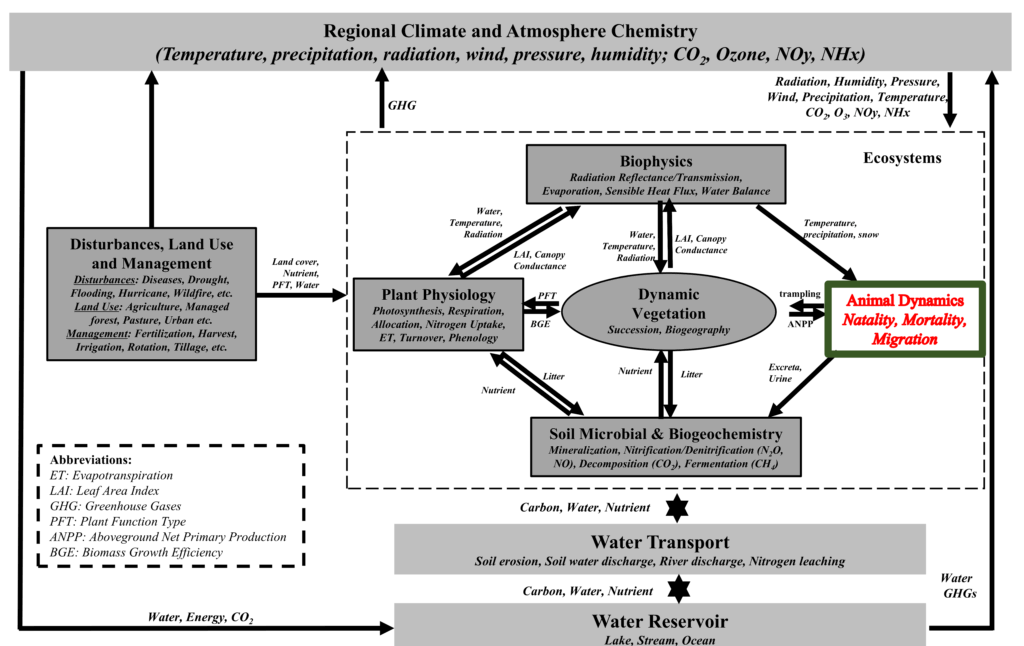
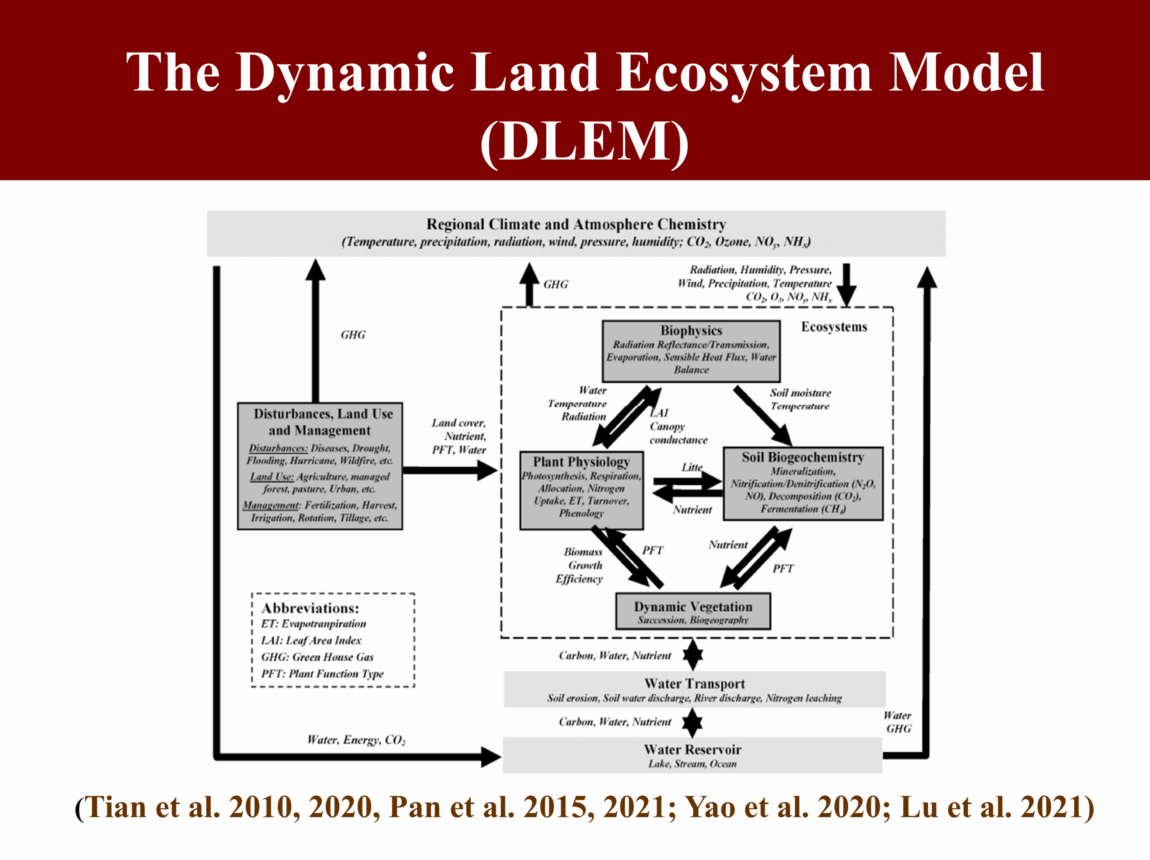
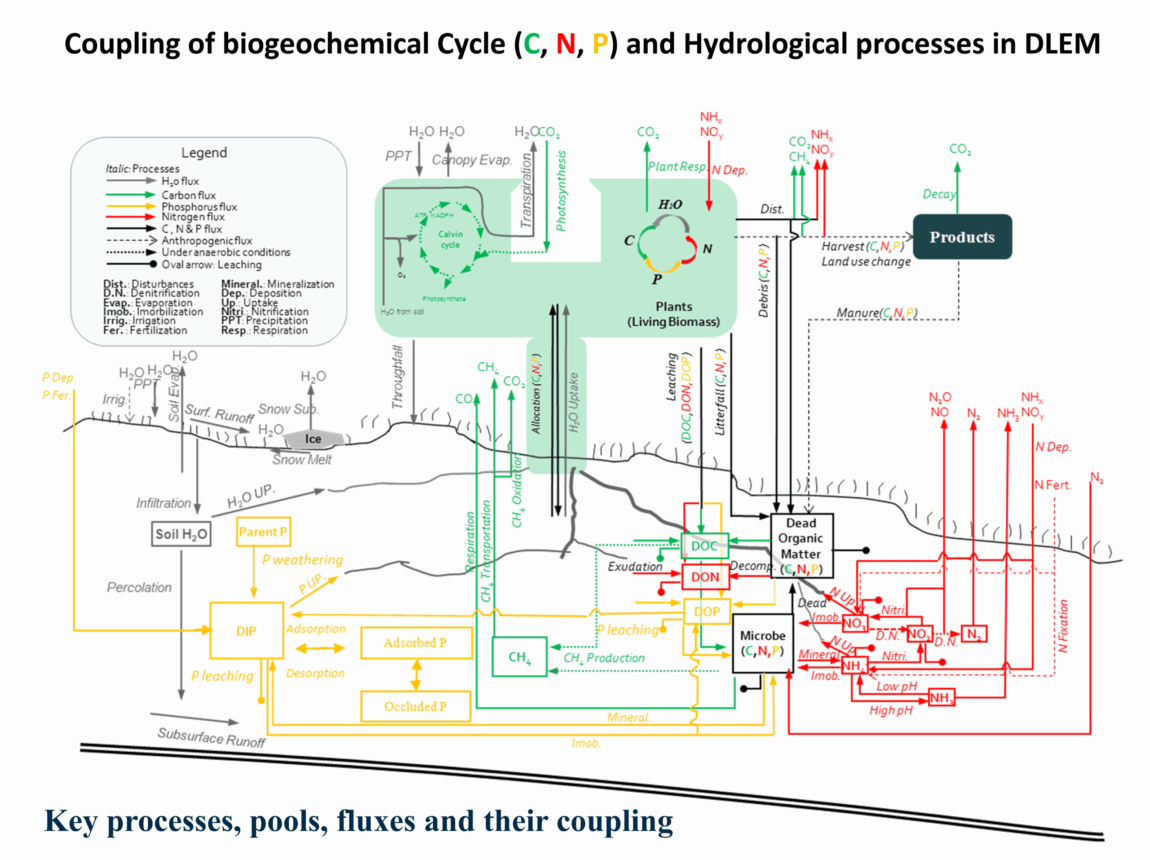
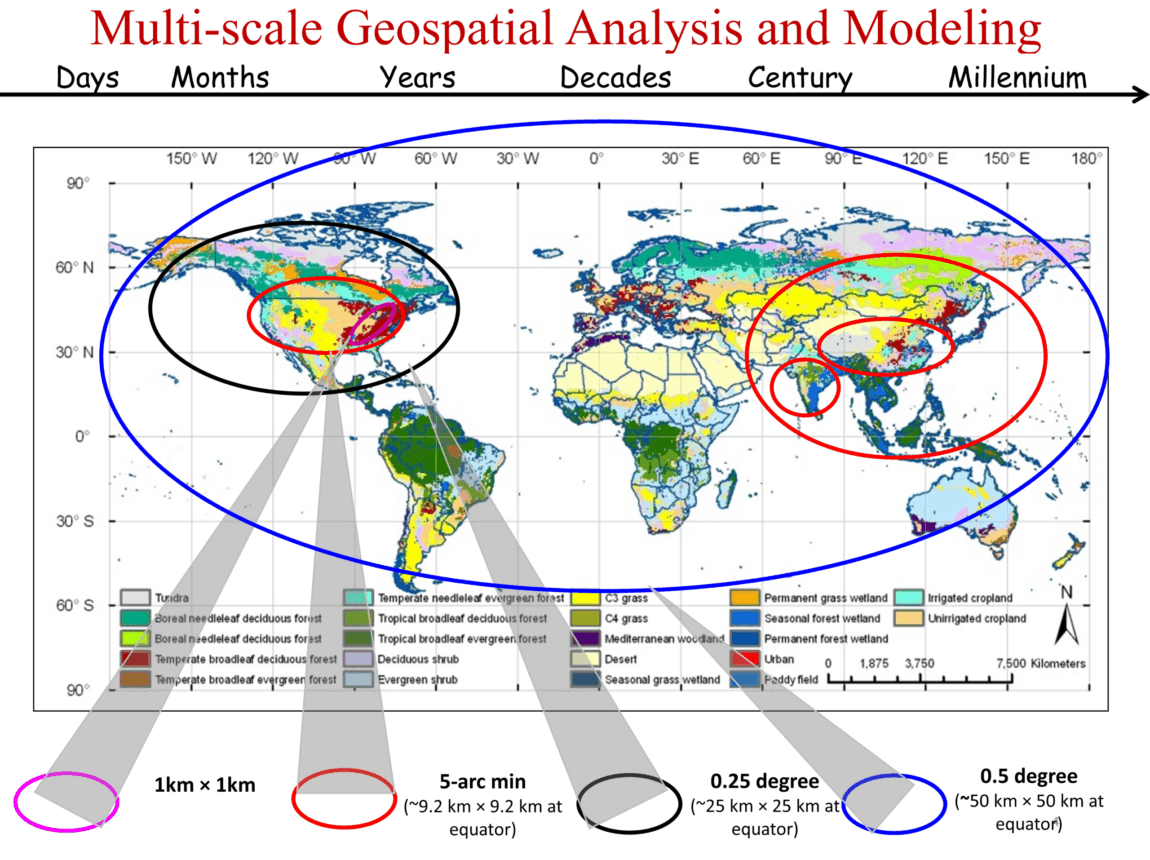
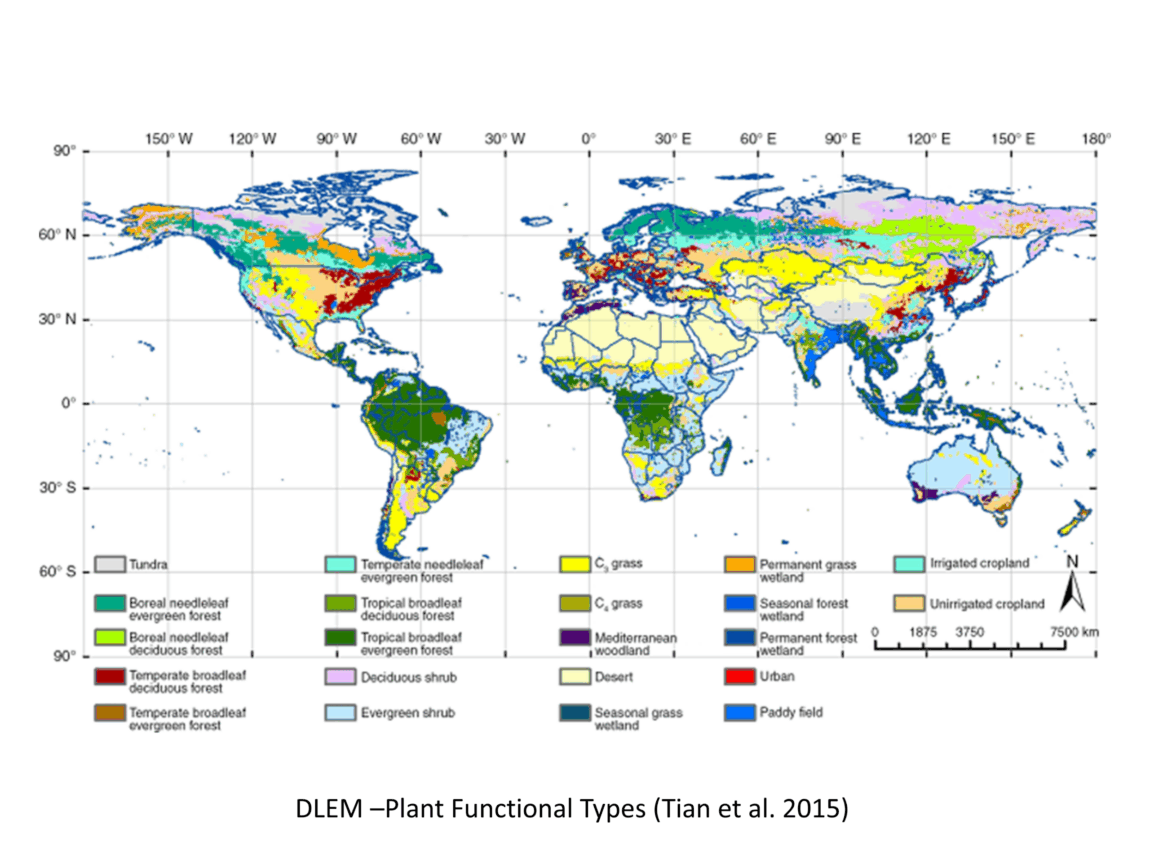
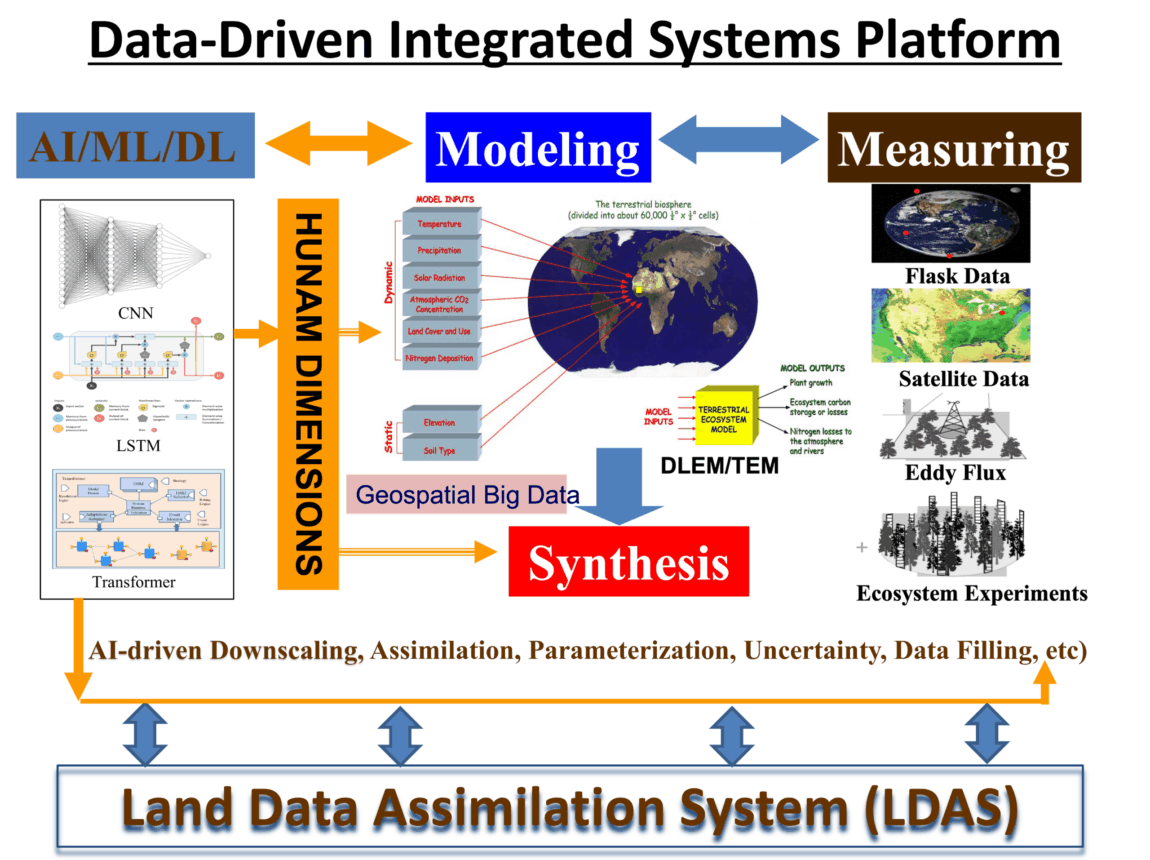
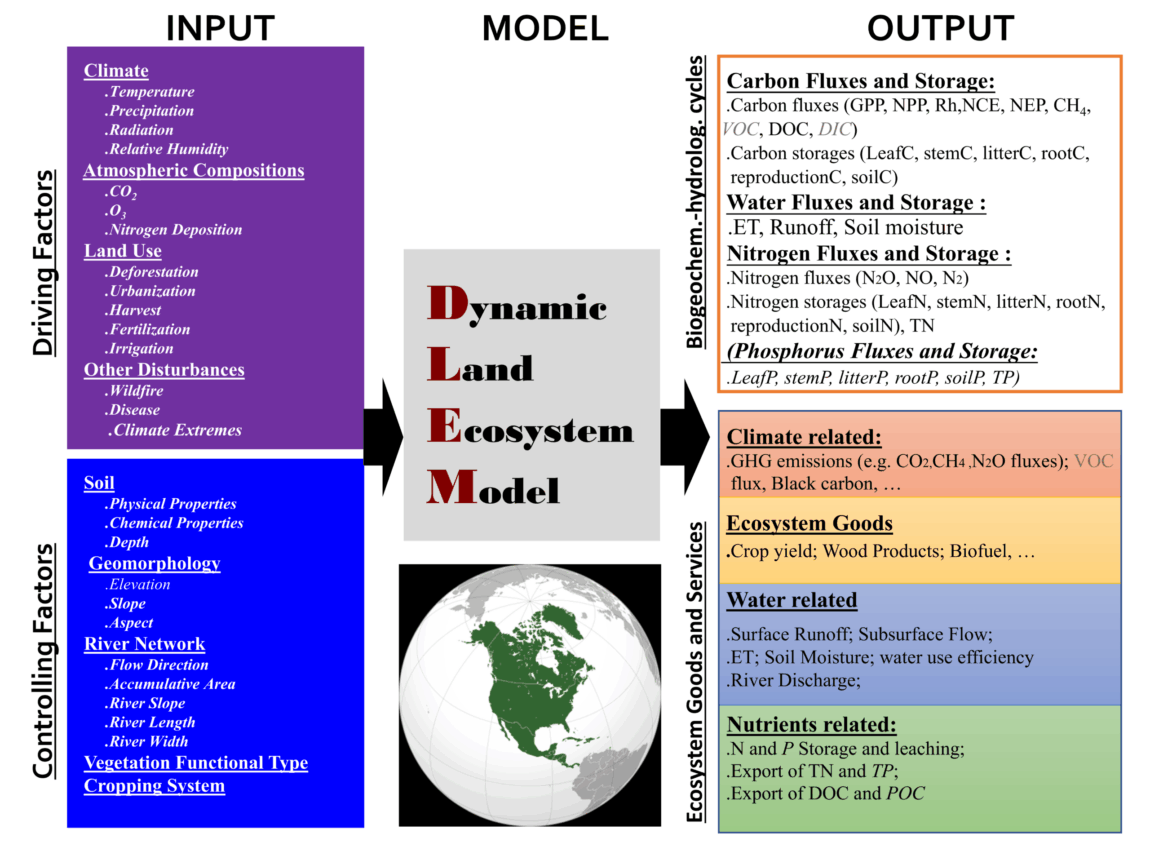
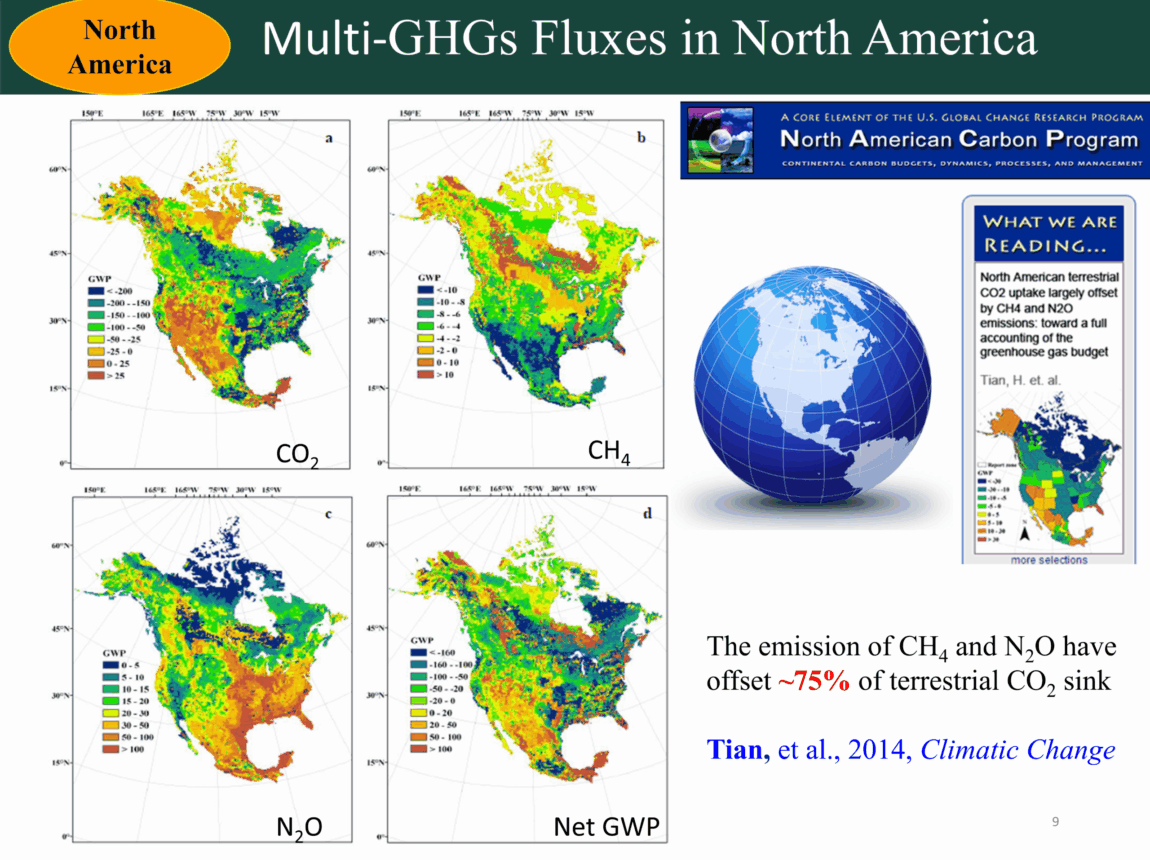
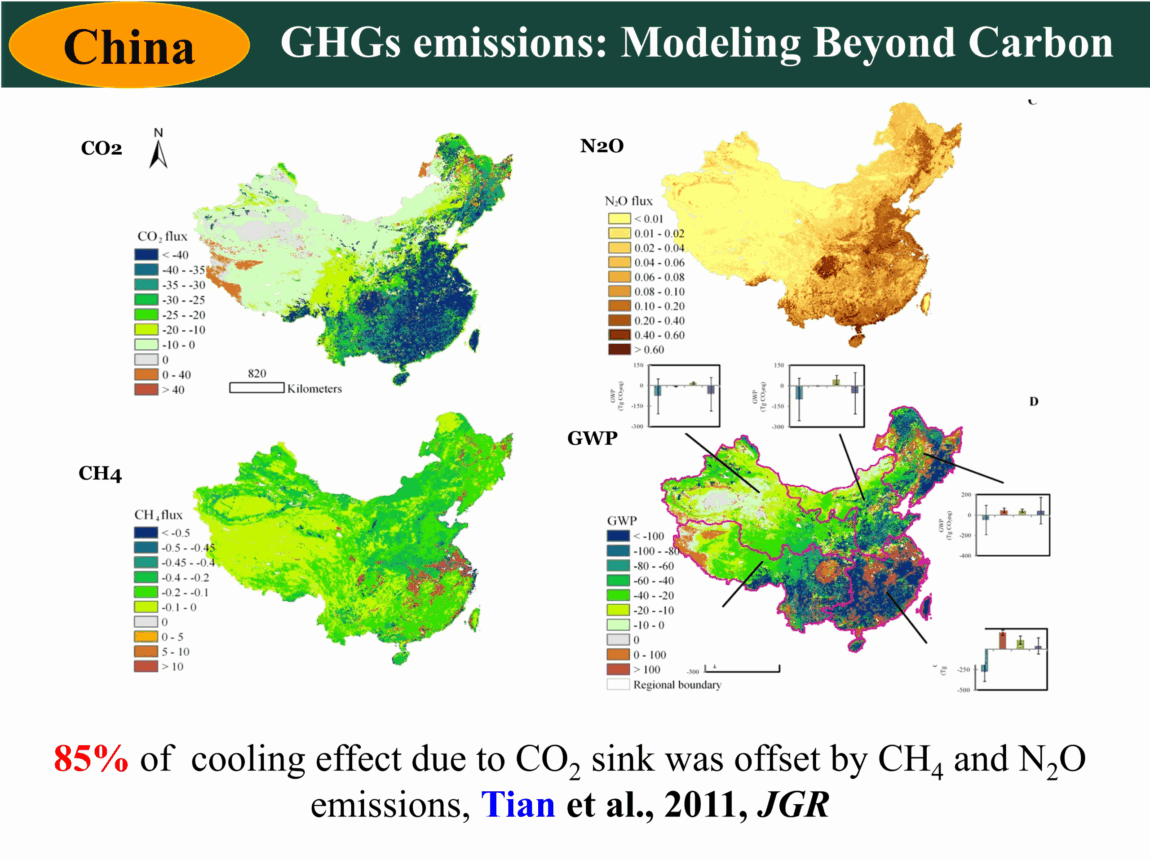
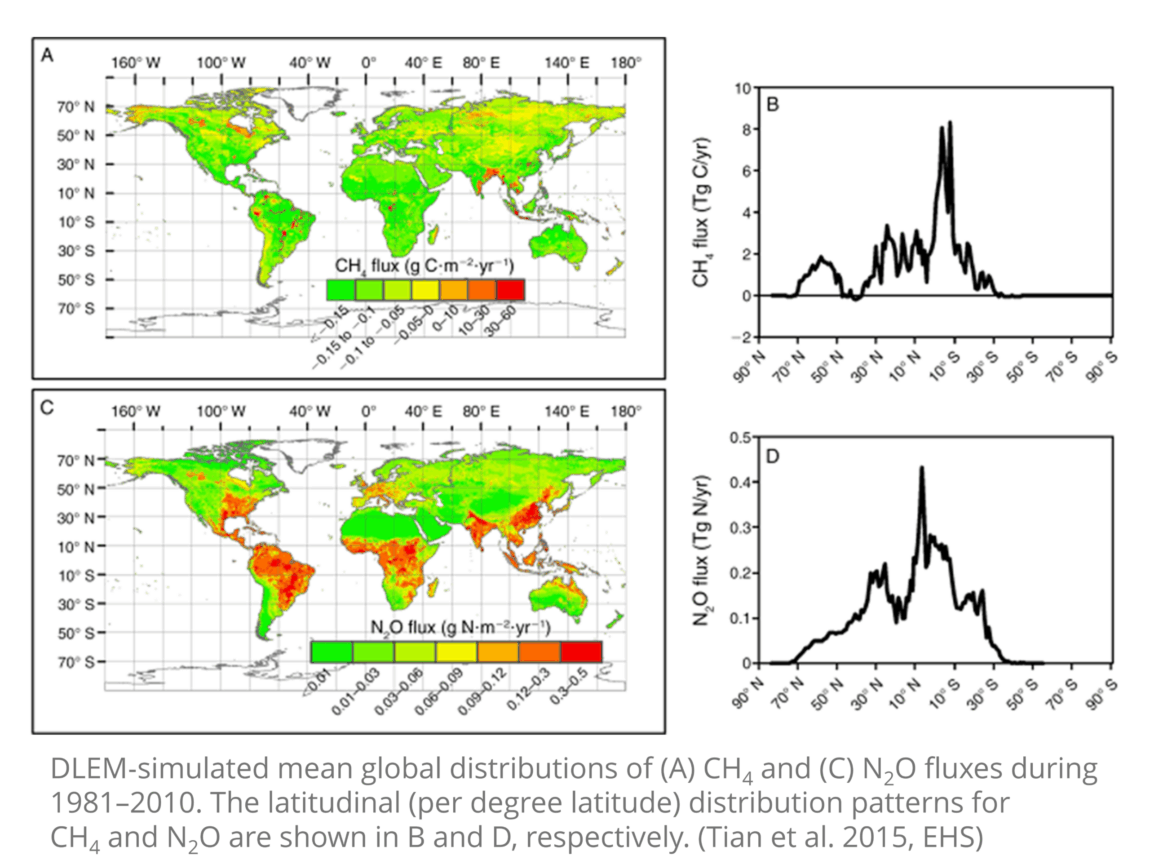
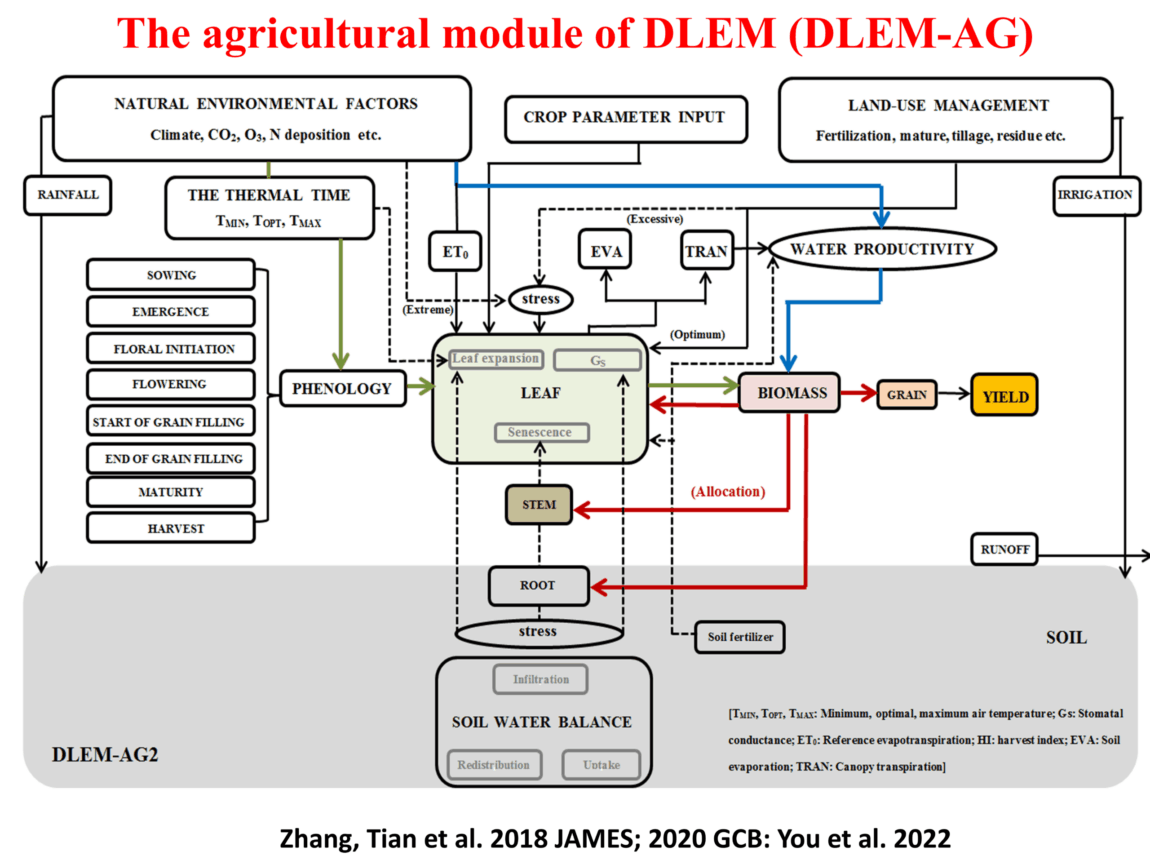
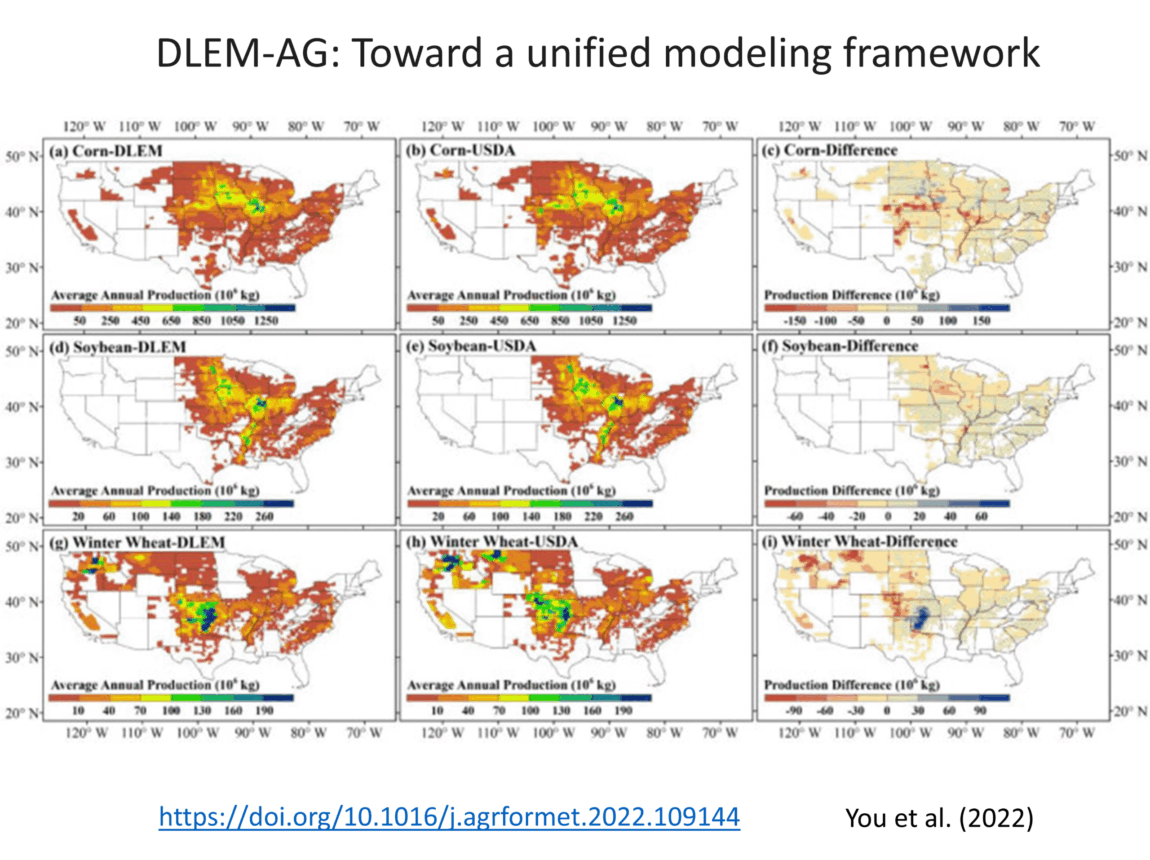
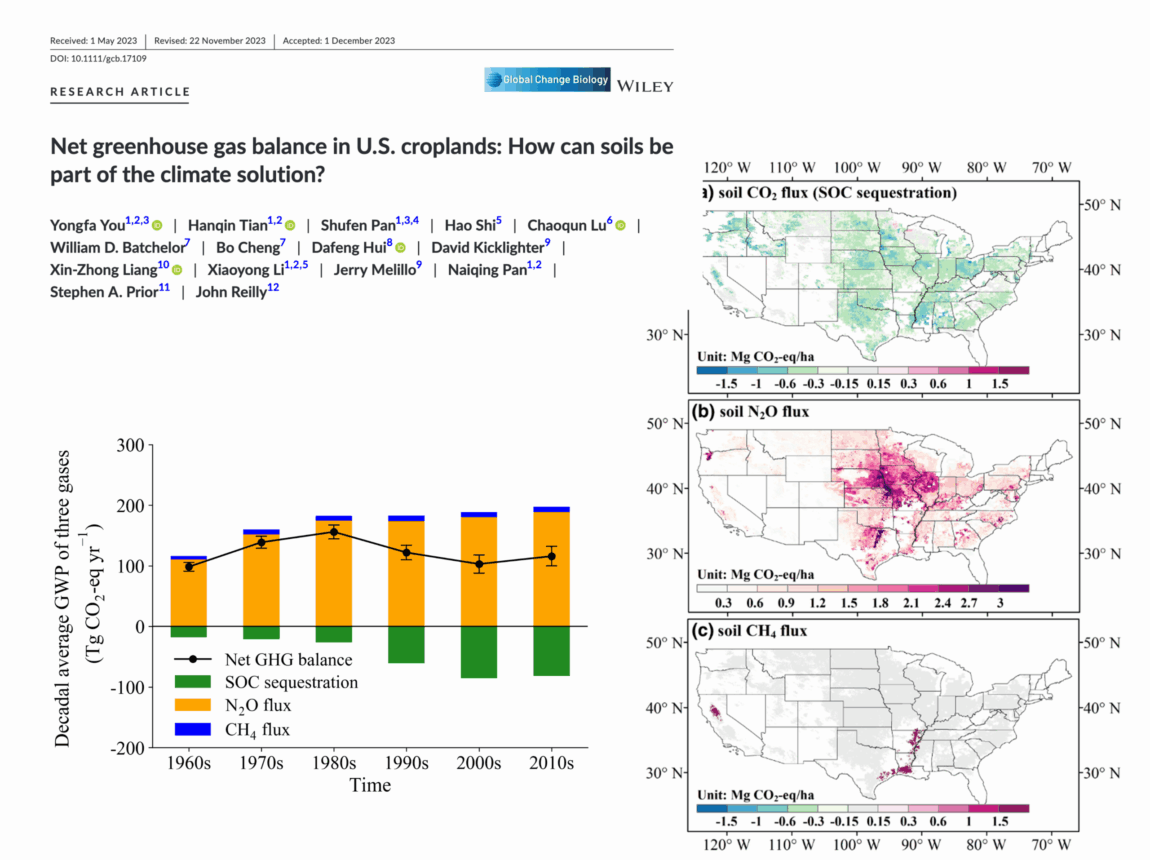
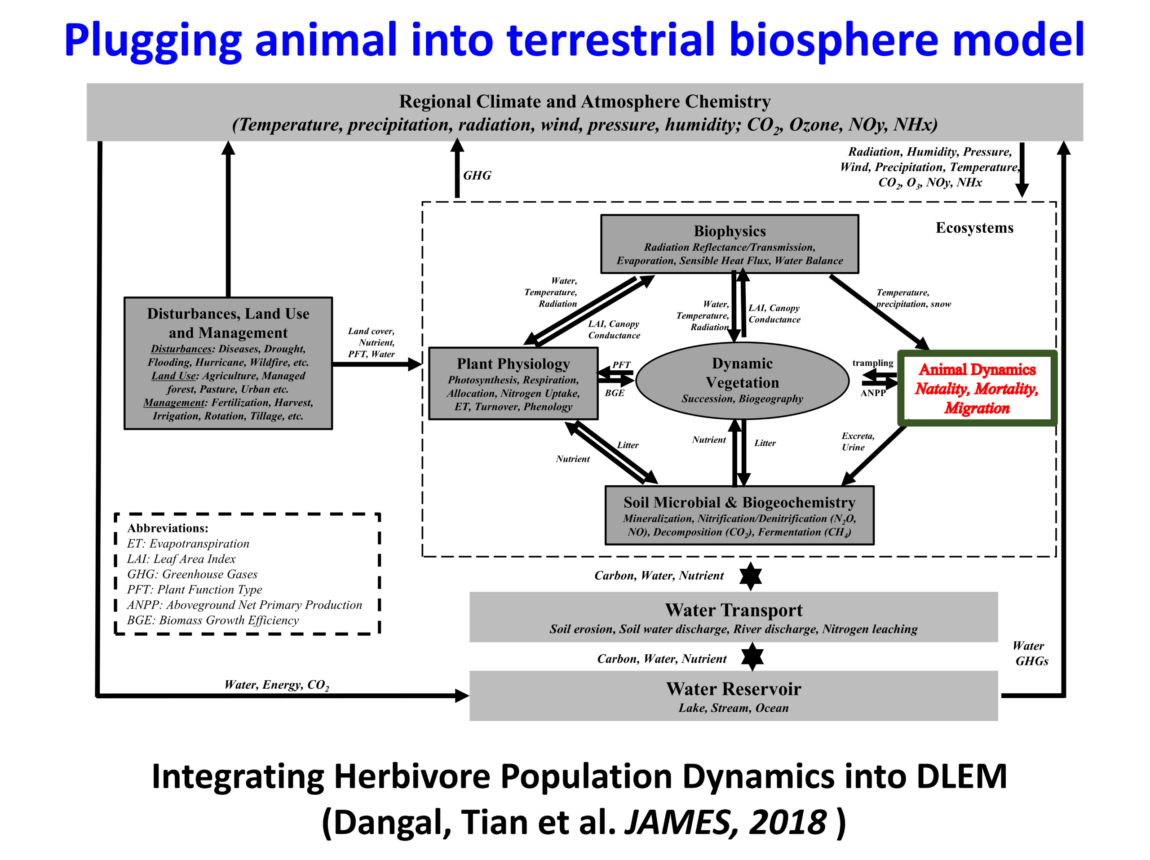
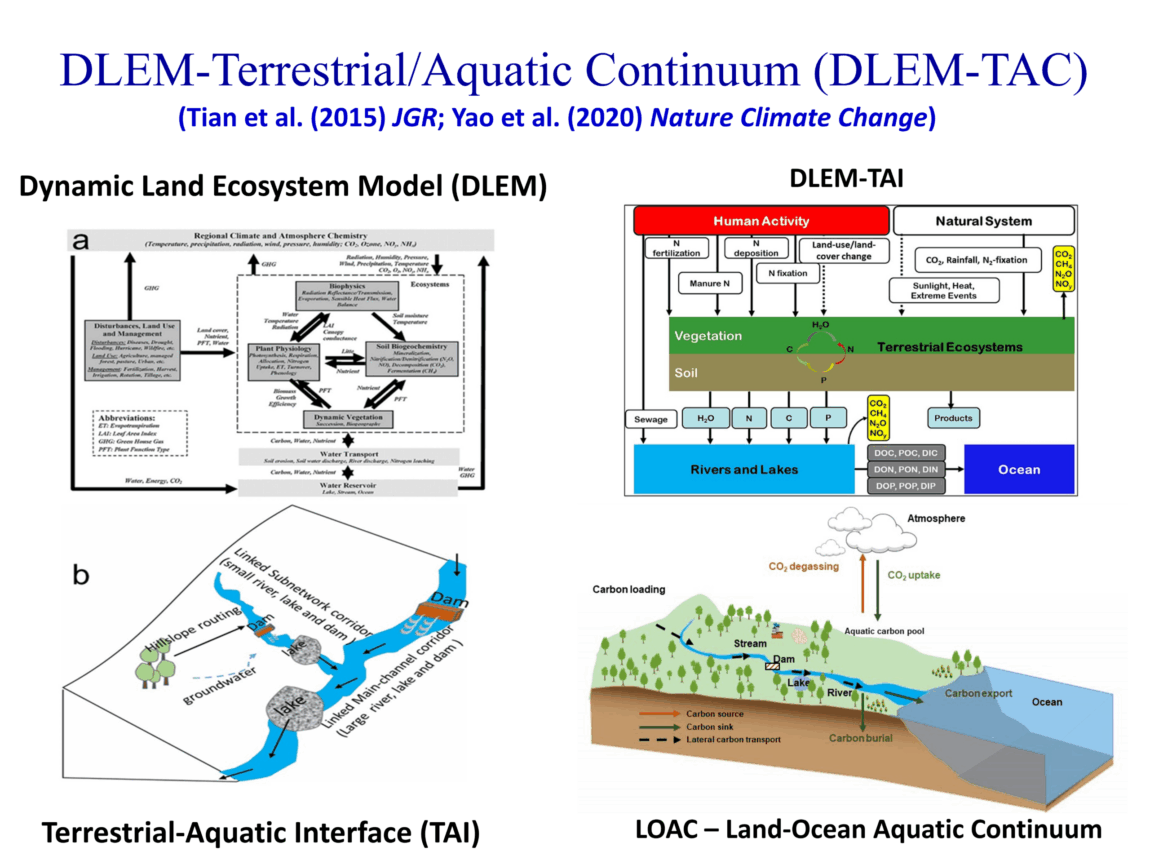
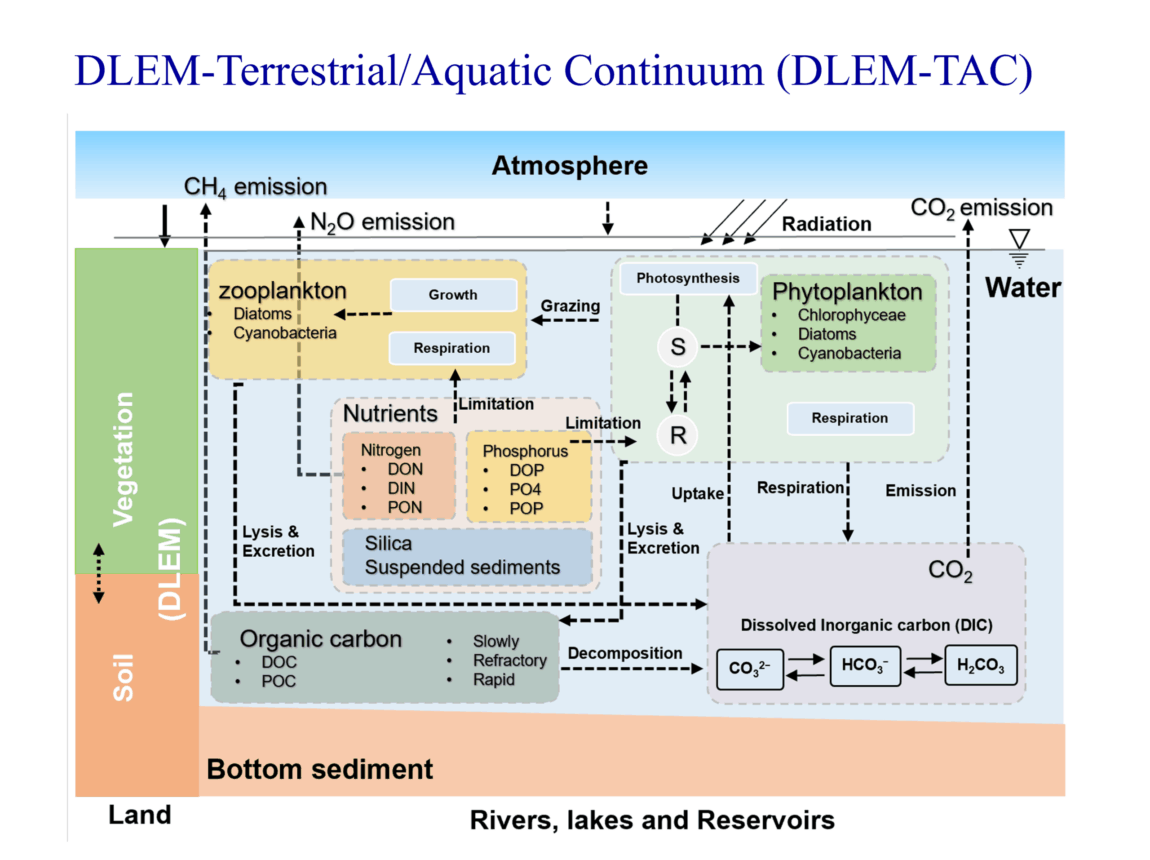
DLEM is a highly integrated Terrestrial Biosphere Model (TBM) that is capable of quantifying daily, spatially explicit carbon, water, and nutrient stocks and fluxes in terrestrial ecosystems and inland water systems across site, regional, and global scales (Pan et al., 2021; Tian et al., 2010, 2020b; Yao et al., 2020). Five core components are included in DLEM to simulate the biogeochemical and biogeophysical processes within terrestrial ecosystems: biophysics, plant physiology, dynamic vegetation, soil biogeochemistry, and natural and anthropogenic disturbances. Through coupling major biogeochemical-hydrological processes, DLEM is able to simultaneously depict the biosphere-atmosphere exchanges of CO2, nitrous oxide (N2O) and methane (CH4) as driven by multiple environmental forcings (e.g., climate, atmospheric CO2 concentration, N deposition, tropospheric ozone pollution, and natural and anthropogenic disturbances). This capability provides a powerful tool for supporting the development of effective GHG mitigation options. DLEM has been widely evaluated and applied to estimate CO2, CH4 and N2O fluxes at multiple sites and regions like China (Ren et al., 2011; Tian et al., 2011), the United States (Tian et al., 2012a; Zhang et al., 2012), North America (Tian et al., 2015; Xu et al., 2012, 2010), and across the globe (Friedlingstein et al., 2020; Saunois et al., 2020; Tian et al., 2020a). In addition, a land-aquatic interface has also been coupled to DLEM (Pan et al., 2021; Yao et al., 2020), which enhances its ability to simulate nutrient loading from agroecosystems and investigate potential mitigation strategies.
The model framework consists of five core components:
Biophysics: simulating instantaneous exchanges of energy, water, and momentum with the atmosphere.
Plant physiology: photosynthesis, respiration, allocation, phenology, nitrogen uptake, and transpiration.
Soil biogeochemistry: mineralization, nitrification–denitrification, fermentation, decomposition, and soil C–N transformations.
Dynamic vegetation: biogeographic redistribution and post-disturbance plant succession.
Natural and anthropogenic disturbances: crop cultivation, harvest, irrigation, fertilization, and land conversion processes.
Together, these fully coupled processes enable DLEM to serve as a comprehensive framework for diagnosing and projecting terrestrial ecosystem responses to climate change, land-use transitions, and anthropogenic disturbances across multiple spatial and temporal scales.