

Around the world, educators, community leaders, and organizations are bringing the Coding as Another Language (CAL) curriculum and ScratchJr to life in unique and meaningful ways. This page showcases the inspiring work of our partners who are adapting and implementing these tools in their own local settings. From classrooms worldwide, they are helping children explore creative expression, storytelling, and computational thinking, all through coding.
To learn more about our guests, read their bios here!
Explore the stories below to see how our global community is making an impact, one project at a time.
Africa
Who we are
Edutab Africa is a Kenya-based edtech organization whose mission is to transform education through technology and innovative learning strategies and focuses on designing and implementing education programs grounded in evidence-based practices aimed to create a more equitable and inclusive learning experience especially in low-resource environments. Edutab Africa was founded in 2018 and headquartered in Kitale Kenya, but with operations extending across Africa, Australia, and the UK. Edutab Africa. Our core areas of expertise of operation include digital learning solutions, teacher professional development, and STEAM (Science, Technology, Engineering, Arts, and Mathematics) education .
Edutab Africa: (+ 254) 723- 419114 – info@edutab.africa
What we care about
Our vision is to transform education through technology and innovative learning strategies. We are committed to addressing the most critical challenges in education through evidence-driven digital technologies, creating a foundation for a more equitable and inclusive learning experience.
What we have done
Creative Coding for Early Learners: A ScratchJr Integration Project (Part of ECCR initiative)
To train teachers and engage children in creative coding using Scratch and ScratchJr by integrating them into early learning environments. The project emphasizes culturally relevant storytelling, SEL, and computational thinking in lower primary classrooms. It took place at Bungoma and Trans Nzoia Counties-Kenya January 2025-Ongoing. The program is conducted in English and it includes 110 teachers from 61 schools reaching 20,000+ students.
The main impact of the project was the successful training of teachers in integrating coding and computational thinking into their teaching using Scratch and Scratch Junior through a culturally responsive and blended learning approach. By combining face-to-face workshops, online self-paced courses, and interactive Communities of Practice (CoP) via WhatsApp and webinars, the project empowered 110 teachers across Bungoma and Trans Nzoia Counties in Kenya. These educators developed enhanced skills in using Scratch and ScratchJr to merge storytelling with coding, fostering creativity, literacy, and problem-solving in their classrooms. Additionally, the project inspired educators to form school-based Communities of Practice that would keep this kind of training sustainable. These teachers will reach 20,000+ learners.
Evidence
Europe
Who we are
Arcacomum’s vision is based on the recognition of the formative and educational value of the early years and the fundamental role of professionals who, through their actions, contribute to the development of autonomous and responsible citizens and to the creation of a freer, fairer and more supportive society.
BOARD President: Maribel dos Santos Miranda Pinto
Secretary: Margarida Maria Aguiar Barbieri Figueiredo
Treasurer: Ana Cláudia Loureiro
GENERAL ASSEMBLY President: Marlene Gabriela Marques Fernandes Loureiro da Silva
Secretary: Fernando Jorge Abrunhosa Vasques
Secretary: Regina Maria Fernandes Colaço de Carvalho FISCAL COUNCIL
President: Luís Valente Secretary: António José Osório
What we care about
Arcacomum’s Mission is to be a space for participation and support for the development of kindergarten teachers, primary school teachers and other education professionals, contributing to the construction of their professional identity. Arcacomum was established October 7, 2009 and it aims to support the professional development and identity of educators. It achieves this by promoting training and information, stimulating innovation in practice and research, facilitating online engagement (including conferences and community access), and offering research project participation and discounted access to education and technology research information.
As a project that is the result of doctoral research and continues to develop both training and research activities, we would like to count on the participation of many more kindergarten teachers interested in learning with ScratchJr for future activities in Portugal. We are also available to take part in European or international research projects aimed at integrating coding in the early years, especially with ScratchJr, and you can use our contact details for this.
What we have done
Our project is titled: “The Scratch Education Collaborative – MIT Media Lab’s Scratch Foundation project, ‘Coding as another language,’ “. To date we have delivered two years of national online training and the opportunity to adopt the Portuguese translation of the CAL Curriculum. Since June 2022, we’ve been piloting this in pre-school at Agrupamento de Escolas de Oliveira de Frades with educator Marlene Fernandes and researcher Maribel Miranda-Pinto (both involved in curriculum translation). Over the past two years, we’ve trained over 150 kindergarten and primary teachers, potentially reaching up to 3,000 children through their classrooms. This project offers ScratchJr training, CAL curriculum adaptation, and participation in the national ‘Create with Scratch’ competition for pre-schoolers (supported by Arcacomum Associação:
Website: https://www.arcacomum.pt
Training website: https://comunidade.arcacomum.pt
Email: arcacomumassociacao@gmail.com
Facebook: https://www.facebook.com/arcacomum/
Evidence
CAL ScratchJr Portugal Project website: https://www.arcacomum.pt/projeto-cal-scratchjr-sec
Various Activity Links:
https://www.arcacomum.pt/estudo-piloto-implementacao-curriculo-cal-scratchjr/
https://www.arcacomum.pt/curriculo-coding-as-another-language-scratchjr-disponivel-em-portugues/
https://www.arcacomum.pt/inicio-2a-formacao-sobre-programacao-com-scratchjr-portugues-online/
https://www.arcacomum.pt/participacao-na-reuniao-design-based-research-ca
Who we are
Department of Preschool Education founded in 1984 at the University of Crete, a public, multi-disciplinary university located on the island of Crete, Greece. The University ranks among the top Greek institutions in international evaluations and maintains a strong research profile through strategic collaborations with prominent research centers such as the Foundation for Research and Technology – Hellas (FORTH). The Preschool Education is one of the leading departments in Greece dedicated to early childhood education and teacher training.
Department of Preschool Education, University of Crete
Rethymnon campus, Gallos, 74100
Rethymnon, Crete, Greece
What we care about
The Department’s mission is to prepare highly qualified educators equipped to support the development and learning of children aged 0–8 years, through a multidisciplinary curriculum that integrates pedagogy, psychology, sociology, linguistics, and the arts. The Department offers a comprehensive undergraduate program, as well as postgraduate and doctoral studies, with emphasis on key areas such as Educational Technology, Inclusive Education, Curriculum Development, and Early Childhood Pedagogy. Our vision is to be a national and international reference point in early childhood education, advancing innovation, equity, and lifelong learning.
What we have done
The technology project is named CAL ScratchJr Greek, it integrated coding as a form of literacy. The project sought to support inclusive, play-based learning that fosters problem-solving, storytelling, and digital competence from an early age, while empowering educators with pedagogical tools and resources aligned with the principles of equity and accessibility. The CAL ScratchJr Greek project took place in Greece, with implementation primarily focused on early childhood and primary education settings. It was carried out in collaboration with schools, educators engaged in the promotion of computational thinking and creative coding for young learners. The project was aligned with national efforts to integrate digital skills into the curriculum and benefited from international cooperation, drawing on the original Coding as Another Language framework developed by Prof. Marina Bers from the DevTech Research Group at Boston College. The project took place during the academic years 2021–2022 and 2022–2023. Throughout this period, the CAL ScratchJr curriculum was implemented in selected schools, with educators receiving training to deliver the program effectively. The initiative aimed to enhance young students’ computational thinking, coding skills, and literacy by integrating the ScratchJr programming environment into classroom activities. It involved 10 Teachers and 150 Students.
In the process of adapting ScratchJr CAL, the curriculum was translated to Greek and several story books in Greek were created to match the needs of the CAL Curriculum.
Who we are
MellonLab is a pioneering educational initiative in Greece that designs and implements innovative STEM and Educational Robotics programs for children and educators. With a strong focus on inclusivity, creativity, and hands-on learning, mellonLAB offers workshops, teacher training, and community outreach programs, combining technology with pedagogy. It collaborates with schools, universities, municipalities, and non-profit organizations, aiming to bridge the digital divide and inspire the next generation of problem solvers. Activities range from coding and 3D design to AI and robotics competitions. Special emphasis is placed on social impact, supporting underserved communities with free STEM education. mellonLAB also contributes to research and policy discussions on STEM education in Greece and Europe.
What we care about
MellonLAB empowers children, youth, and educators by equipping them with essential 21st-century skills through innovative STEM, robotics, and coding programs. Its mission is to foster critical thinking, creativity, empathy, and collaboration, preparing learners to thrive in an ever-changing world. By combining cutting-edge technology with inclusive, project-based learning methodologies, mellonLAB inspires lifelong learning and civic responsibility. The organization places special emphasis on equity, offering free access to STEM education for underserved communities, and actively contributes to national and international initiatives that promote digital and educational transformation.
What we have done
“Coding Book Miners” which combined code learning in Preschool and Early Primary with Literature Activities in Greek and in English. It took place at the MellonLab & Argiri-Laimou School from March through May 2025. It involved several teachers and 120+ children. We managed to train teachers (English teachers, ICT Teacher, Preschool and Primary School Teachers) to code using Scratch Jr and also be inspired and find ways to implement coding learning activities in their teaching. As for the little ones, they had a wonderful time bringing their ideas and book characters to life!
We run a CLIL (Content and language integrated learning) lesson for the 2nd Graders, so we decided to do all activities in English (and all communication) in English! In addition, our project is still on, and it will be concluded by the end of the school year (June 13).
Who we are
UdiGitalEdu is a research group at the University of Girona dedicated to developing projects that intersect Education, Technology, and Development Cooperation. The group designs training programs for teachers and creates learning experiences and resources for children and young people, aimed at fostering creativity, critical thinking, and positive values. UdiGitalEdu works on projects at local, national, and international levels, focusing particularly on disadvantaged groups and children from vulnerable families and communities.
What we care about
Empowering children, especially from vulnerable communities, to become change-makers by using technology as a tool for expression, creation, and social transformation through practical, creative learning experiences rooted in STEAM, Creative Computing, and Maker education.
What we have done
Aprendre amb ScratchJr: més enllà de la programació (Learning with ScratchJr: Beyond Coding). The project trained catalan teachers to use ScratchJr to develop universally applicable skills and implement CAL. Currently, we are active in one school Escola El Veïnat in Salt, Girona (Catalonia, Spain). We are also working with the Department of Education of Catalonia. The project began in October 2024 and is currently ongoing, it is taught in Catalan by 15 teachers and about 70 children have participated in it. Our team translated CAL to Catalan and worked on the translation of TeachCAL.
Evidence
Not available at the moment
Who we are
ITED is a research group at the University of La Laguna. We are developing projects at the confluence of Human-Computer Interaction, Technology and Education. Our research has a practical approach, and our multidisciplinary team is focused on the creation of digital experiences for people, with special attention to the diversity and inclusion of vulnerable populations and learning special needs, for example Down syndrome or hospitalized children. We also put the gender perspective in our research and in teaching, promoting the STEAM vocations. We believe that coding is a new literacy, and we are researching creative and critical thinking from childhood. We apply STEAM and maker education approaches, trying to create inclusive educational environments. In this sense, we are working in different research projects, like “COEDU-IN (Digital literacy and STEAM at early ages: an inclusive co-educational proposal)” and “Childhood and digital screens: analysis and proposals for the educational use of ICT at school and at home in the Canary Islands.” We design and develop face-to-face, blended learning and online training actions for different professional groups: teachers, professionals, families, etc.
ited@ull.edu.es, Cam. San Francisco de Paula, 19, 38203 La Laguna, Santa Cruz de Tenerife
What we care about
Our research has a practical approach, and our multidisciplinary team is focused on the creation of digital experiences for people, with special attention to the diversity and inclusion of vulnerable populations and learning special needs, for example Down syndrome or hospitalized children. We also put the gender perspective in our research and in teaching, promoting the STEAM vocations. We believe that coding is a new literacy, and we are researching creative and critical thinking from childhood. We apply STEAM and maker education approaches, trying to create inclusive educational environments. In this sense, we are working in different research projects, like “COEDU-IN (Digital literacy and STEAM at early ages: an inclusive co-educational proposal)” and “Childhood and digital screens: analysis and proposals for the educational use of ICT at school and at home in the Canary Islands.” We design and develop face-to-face, blended learning and online training actions for different professional groups: teachers, professionals, families, etc.
What we did
Our project was named COEDU-IN: Coding for co-education and inclusion. COEDUIN aims to develop an inclusive and diverse set of educational resources for teachers, students, and families by integrating various equitable creative coding pedagogical approaches. These approaches include:
– Coding as another language (CAL), which recognizes coding as a valuable means of communication and expression, just like any other language.
– Co-education, an educational method that promotes gender equality and non-discrimination based on sex, creating a safe and respectful learning environment for all students.
– Universal Design for Learning (UDL), an educational framework that acknowledges the diverse learning needs and preferences of children and adolescents and emphasizes differentiated learning techniques to meet individual needs in the classroom.
– The Sustainable Development Goals (SDGs) of the United Nations, which aim to promote the prosperity of the planet by addressing social, economic, and environmental challenges.
By incorporating these pedagogical approaches into its educational resources, COEDUIN seeks to provide a comprehensive and effective learning experience that fosters creativity, critical thinking, and social responsibility.
It took place on the Island of Tenerife, Canary Islands. It was conducted in Spanish, lasted from 2022-2024 and it involved 137 teachers / 164 children. A key contribution to this project was the creation of the first AI digital literacy program for early childhood education in Spain, piloted in three preschools, incorporating voice-based virtual assistants, educational robotics kits, and social robots with generative AI.
Evidence
Middle East
Who we are
The Mindful Learning Technologies Lab at the Faculty of Education in Science and Technology, Technion – Israel Institute of Technology.
What we care about
Two key foci of the Mindful Learning Technologies Lab at the Technion – Israel Institute of Technology are educational technologies and computer science education. We design, implement, and evaluate educational tools and curricula to support cognitive and affective processes in learning. We believe that every learner should have access to coding, not only as a foundation for essential technical skills and greater educational equity, but also as a new form of literacy that supports self-expression, emotional development, and a deeper sense of agency in the world.
What we have done
Coding as Another Language (CAL) – Israel, We explore whether preschool teachers with no prior coding experience can successfully teach coding using the CAL-ScratchJr and CAL-Kibo curricula, and to examine how coding can support both technical proficiency and creative self-expression in preliterate children. Haifa, Israel, 2022-2023. The program was conducted in Hebrew. It involved ScratchJr: 2 teachers; 26 children (M=5.72, SD=0.33); Kibo: 2 teachers; 28 children (17 boys, 11 girls M = 5.94, SD= 0.52). Engaging with the CAL curriculum increased teachers’ coding self-efficacy and improved children’s coding proficiency (ScratchJr: most children reached the Emergent stage of coding proficiency; Kibo: more varied distribution along stages, with more children reaching coding/decoding and fluency levels). No significant improvement was evident in terms of CT (Tech-Check-based) in either condition. No gender differences were found. Furthermore, it strengthened teacher-student relationships, enhanced community partnerships (e.g., a demonstration to parents), empowered teachers and students (importantly, also those who tend to struggle in traditional scholastic tasks), and pointed to coding’s potential as a tool for emotional expression.
A key conclusion in our study was the necessity to include teachers in the implementation process as equal professional players affecting the curriculum. Teachers were committed and enthusiastic about the project, and went above and beyond to support its implementation. Nevertheless, having no earlier coding background, they presented notable reluctance at first. Alongside teaching something they didn’t have the tools for (at first), their related self-perception was also challenging. Therefore, they were encouraged to change the curriculum as they saw fit (each modification had to be approved), emphasizing such changes stem from the teachers being the experts of their classroom. As more successful occasions emerged, more confidence in using the curriculum was evident.
Evidence
North America
Who we are
Paragon Mills Elementary is a PK-5 public Title 1 school. Our mission is to deliver a great public education to every student every day through a community that supports each other to become communicators, problem solvers, and life-long learners.
Ann Tierno; atierno@mnps.org; 260 Paragon Mills Rd, Nashville TN 37211
What we care about
Hands-On Coding for All, was created to bring coding to all students in K-2, with an emphasis on EL students (English Language Learners).
What we have done
It was implemented through our computer science curriculum for K-2 and the English Learners (EL) Reading Club during the 2023-2024 school year with the participation of 300 students. Our project was part of a larger one called ‘Hands-on Coding for All”, it reached 500 students in K-4, with 65% of participants identified as multilingual learners. The Scratch Jr. component specifically engaged in grades K-2, including 20 students who received extended learning opportunities through the EL Reading Club enrichment program. We created a deck of cards for students to use when planning coding projects in Scratch Jr. This is modeled after a literature circle, but it is called a coding circle instead. The cards allow students to have an “unplugged coding experience” to create or recreate a project that they then code afterward utilizing ScratchJr. The unplugged practice allows students to think critically about constructing a successful program in Scratch Jr. These students received additional instruction in coding, project design, and research skills, which they used to create interactive projects in Scratch Jr.
In addition to in-class learning, Family Coding Night events introduced all participating students and their families to careers in computer science. These events helped build awareness and excitement about future opportunities in technology among both students and their parents or caregivers.
Evidence
Who we are
The Maryland Center for Computing Education (MCCE) was formally established in statute and funded with the enactment of Securing the Future: Computer Science Education for All on July 1, 2018. The purpose of MCCE is to “expand access to high-quality computer science education in grades pre-kindergarten through 12 by strengthening the skills of educators and increasing the number of computer science teachers in elementary and secondary education (Maryland Code, § 12-118).” MCCE received an initial state funding in 2018 and an additional state funding each year since 2018.t. MCCE has worked to increase the computing knowledge and skills of the Maryland public teacher workforce and enable the Maryland Local Education Agencies (LEAs) to offer more computing instruction.
MCCE provided state level professional development (PD) to educators from schools across all Maryland Local Education Agencies, as well as some of the independent Schools, Juvenile Services Education System Schools, and to public and private IHEs to assist them in local efforts to increase the computing education knowledge and skills of Maryland’s teaching workforce.
Tim Dixon: leahterps@gmail.com
Elissa Hozore: elissa@codeintheschools.org
What we care about
Our mission is to equip educators with the skills to prepare students for success in a technology-driven and ever-changing society while significantly reducing disparities in student access to and participation in Computer Science education. Our vision is to become the premier resource center for educators and students collaborating with University System of Maryland campuses, public and private school systems, nonprofits, industry partners, and other government agencies for a strong partnership to educate and prepare students for the workforce.
What we have done
We created the “Unplugged CAL for PreK”. Our team adapted the pre-K CAL lessons to be fully unplugged while incorporating executive functioning skills from the Maryland State pre-K Standards. Currently, six Maryland teachers are either implementing these lessons with their pre-K students and/or reviewing them to provide feedback. We’ve developed a structured feedback template that evaluates various aspects of the lessons. While planning and preparing resources began in 2023, work with teachers began in April and extended until the end of September 2024.
This project was conducted in English with six teachers piloting now, approximately 120 students to develop their computational thinking and enhance their executive functioning skills through the modified CAL lessons. This learning is taking place in classrooms regardless of students’ access to devices.
We used AI to support the lesson adaptation process and shared our approach with educators to show how AI can efficiently and effectively tailor lessons to meet student needs and fit specific classroom contexts.
Evidence
Who we are
K-12 Public School District located in Hillside NJ. Serve about 3000 students
Lisa Corona: lcorona@hillsidek12.org
Rita DellaValle: rdellavalle@hillsidek12.org
What we care about
The mission of Hillside Public Schools is to provide all students with the knowledge and skills needed to be successful, engaged citizens; citizens that contribute to the vitality of an ever-changing world through rigorous academic, culturally responsive, instructional student support programs. Hillside programs seek to strengthen character, cultivate innovation, and foster leadership.
What we have done
Our program, CAL IN K, Introduced Kindergarten students to coding at the Abram P. Morris Early Childhood Center, during the 2024-2025 School Year. Lead by 1 teacher, 18 students were exposed to coding, collaborating, sharing and problem solving. It generated excitement and confidence in coding. Also held a Scratch Jr Night with families to encourage coding at home. We also had the opportunity to showcase coding at monthly board meeting as a key innovative program for our school.
Who we are
The Digital Learning Lab at UC Irvine is a university research lab that studies issues of learning through technology for diverse learners.
sharinj@uci.edu
What we care about
At the Digital Learning Lab at UC Irvine, we provide three years of an interdisciplinary, culturally relevant elementary curriculum. In the first two years, students experience computational thinking concepts through relevant and engaging learning activities and projects. The third year integrates coding, community-based environmental literacy, and data literacy for all students. The lessons promote diverse students’ computational thinking skills, civic engagement, data literacy, environmental literacy, and language and literacy while leveraging students’ cultural and community knowledge.
What we have done
We piloted the Coding as Another Language curriculum “as is” in 17 classrooms serving predominantly Latino and multilingual students in Southern California. UC Irvine, Santa Ana Unified School District (Santa Ana, CA); Montebello Unified School District (Montebello, CA). Southern California, Region.The project took place during the academic year, 2022-2023. It was conducted in English and it involved 17 teachers and 340 students. As the project developed, we examined issues of intersectionality and how they influenced early childhood coding.
Elementary Computing for All Website: https://www.elementarycomputingforall.org/
Who we are
While working at Cornell Tech on the K12 team, we helped large pubic schools begin to integrate Computational Thinking and Problem solving in grade prep-5.
kelpowers@gmail.com or kpowers@hackleyschool.org,
293 Benedict Avenue, Tarrytown, New York, 10591
What we care about
Cornell Tech’s K-12 initiative aims to make computer science education accessible and engaging for all students, starting in elementary school. Their mission is to empower educators, students, and families with the knowledge and skills needed to thrive in the digital age, ensuring that computer science is a core component of K-12 education.
What we have done
Our project was called Scratch Education Collaborative SIG (ScratchJr), we built resources to go with the CAL curriculum, Develop Teacher Content Knowledge and Confidence to bring ScratchJr into their classrooms, K-2. It took place mostly in Public School 86 Bronx, NY. While planning and preparing began in 2023, it was taught mostly in English and sometimes in Spanish. It involved approximately 105 teachers and 800 to 1000 students. The greatest impact was developing Teacher Content knowledge and practice to infuse CAL into their classrooms.
Evidence
Who we are
Mississippi 4-H is proud to offer programs and growth opportunities that put the heads, hearts, hands, and health of Mississippi’s youth to work learning and applying the essential elements of the 4-H program: belonging, mastery, independence, and generosity.
What we care about
4-H Youth Development Education creates supportive environments for young people and adults to reach their fullest potential. In support of this mission, we will:
Use research-based knowledge and land-grant system to provide quality programming for young people and adults.
Provide formal and non-formal community-focused experiential learning
Develop skills that benefit young people throughout life
Foster leadership and volunteerism in 4-H’ers and adults
Build internal and external partnerships for programming and funding
Strengthen families and communities
South America
Who we are
The Varkey Foundation is a non-profit organization that, through various professional development programs, empowers teachers, develops their leadership, enhances their skills, and enriches the various stages of the educational process. Since the end of 2016, they have trained 33,000 teachers, principals, and students from more than 8,500 regional schools.
Also, through various awards—the Global Teacher Prize and the Global Student Prize—they recognize teachers and students who make a difference and generate an impact in their communities.
What we care about
The Varkey Foundation believes that every child deserves a great teacher. For this reason, they work at different levels of the educational ecosystem, from the classroom to the ministries of education. At Varkey, they firmly believe in collaborative work with all stakeholders to achieve educational transformation.
What have we done
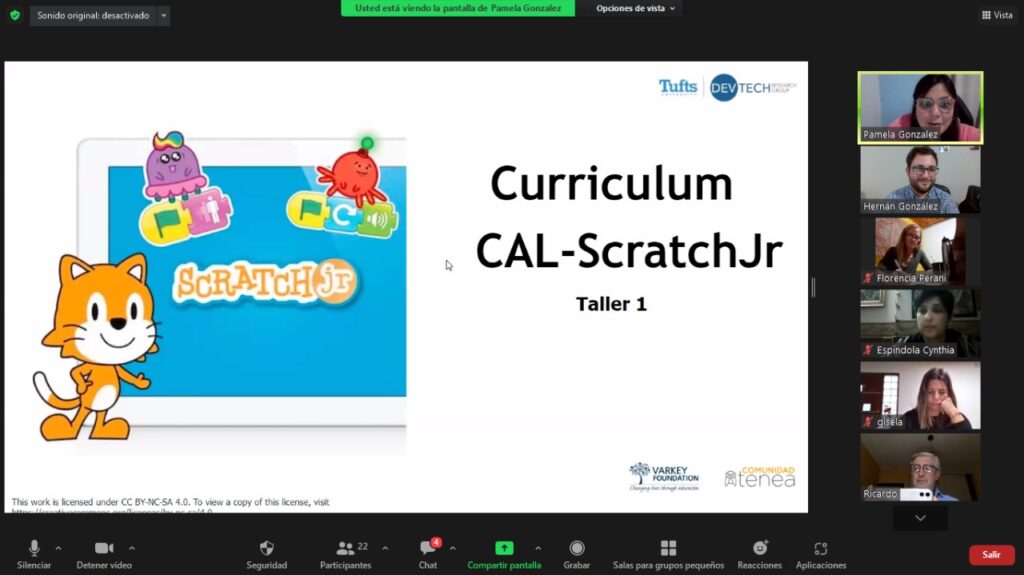
From 2021 to 2022, Varkey Foundation collaborated with the DevTech Research Group to translate into Spanish, adapt, and implement the Coding as Another Language (CAL) curriculum for ScratchJr in schools across Corrientes and Mendoza, Argentina.
The CAL-Argentina research involved 62 teachers and over 600 students from 17 schools, including kindergarten, first, and second grades. Following a randomized controlled trial study design, half of the students participated in the CAL intervention, while the other group continued with their regular curriculum as a control condition. Throughout the study, teachers received training and support to ensure effective implementation, enabling them to make additional adaptations pertaining to localization during instruction, including modifying songs, games, and activities to suit their classrooms and curricula.
The research included data collection at various stages, with data collected simultaneously from students and teachers:
Students: Coding Stages Assessment (CSA) and TechCheck assessments on computational thinking before and after implementing the CAL curriculum, along with analysis of ScratchJr projects collected at three points during the intervention.
Teachers: CSA and TechCheck assessments before and after the training, surveys at four points in the curriculum, and focus groups at different process stages.
The data obtained allow for further improvement in early childhood programming instruction and its integration into various educational settings.
The results of this research project can be found here.
Evidence
Who we are
We are the Uruguayan government’s center for educational innovation using digital technologies. We promote the integration of digital technologies into education to improve learning and foster processes of innovation, inclusion, and personal growth.
Address: 6201 Italia Avenue / Los Ceibos Building. Phone number: (+598) 0800 2342 email address: ceibal@ceibal.edu.uy
What we care about
Our mission is to be Uruguay’s center for educational innovation using digital technologies, promoting the integration of technology into education to enhance learning and foster processes of innovation, inclusion, and personal growth. Our vision is to promote, together with the education system, innovative and inclusive education with a view to the future, taking advantage of the opportunities that technology offers so that every student in Uruguay can develop their learning and creative potential, building capacities for global citizenship.
What we have done
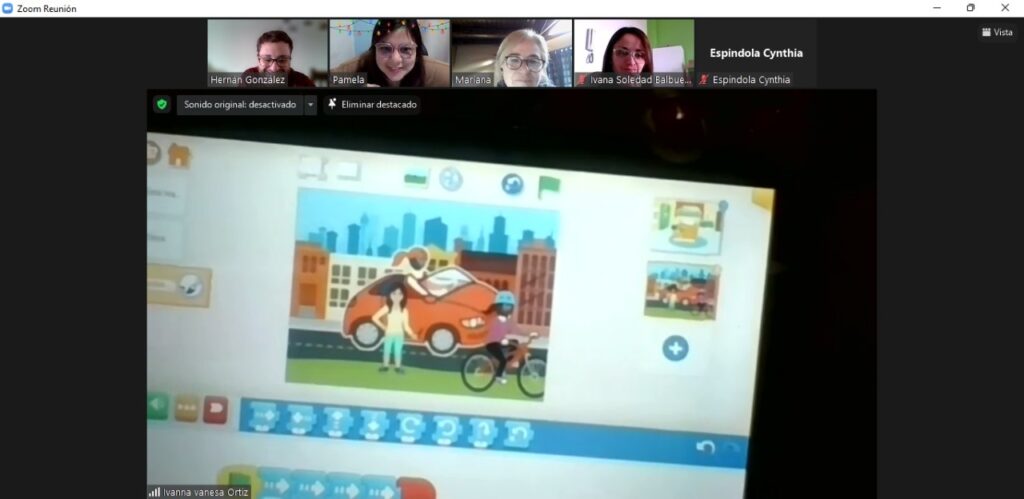
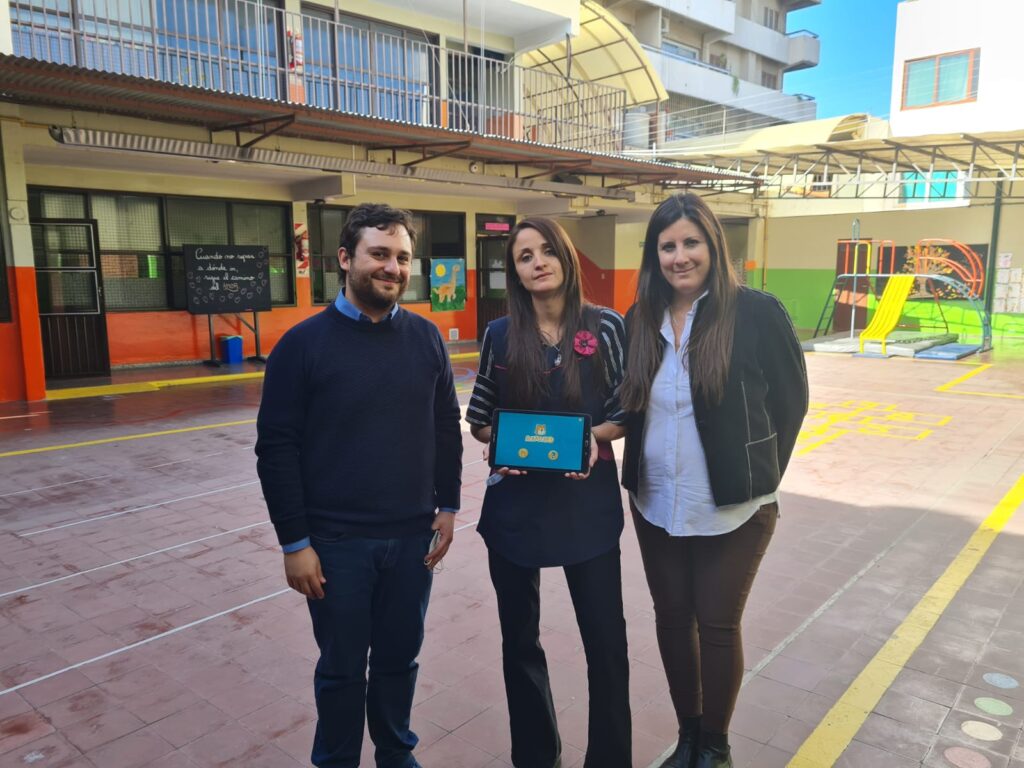
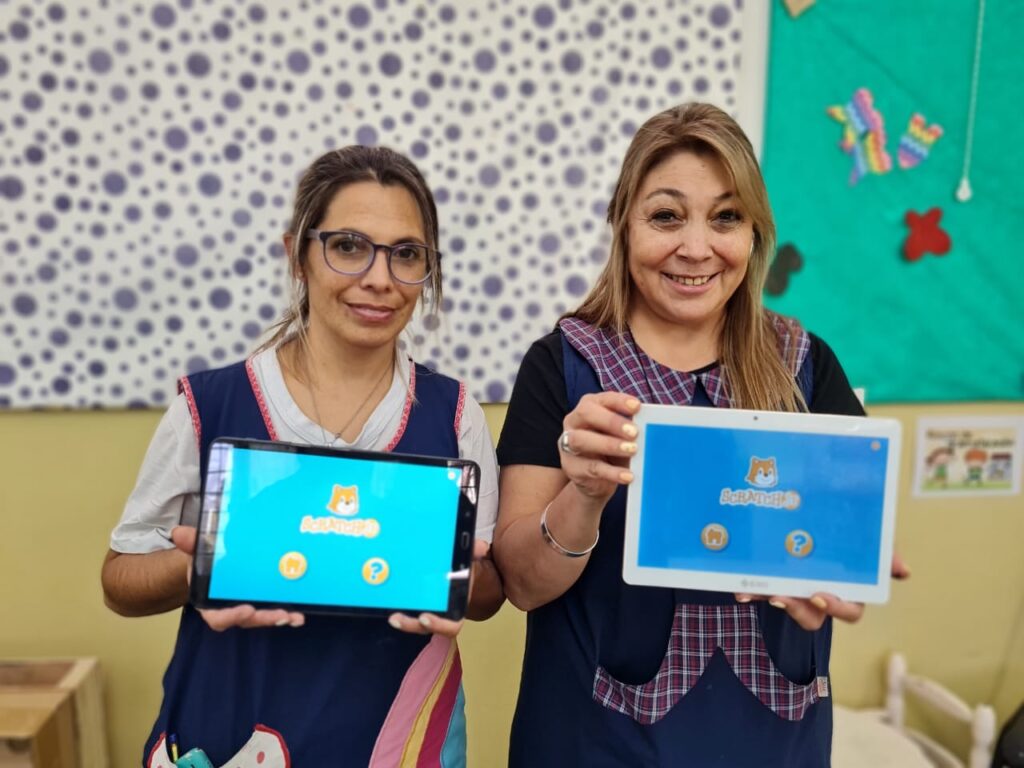
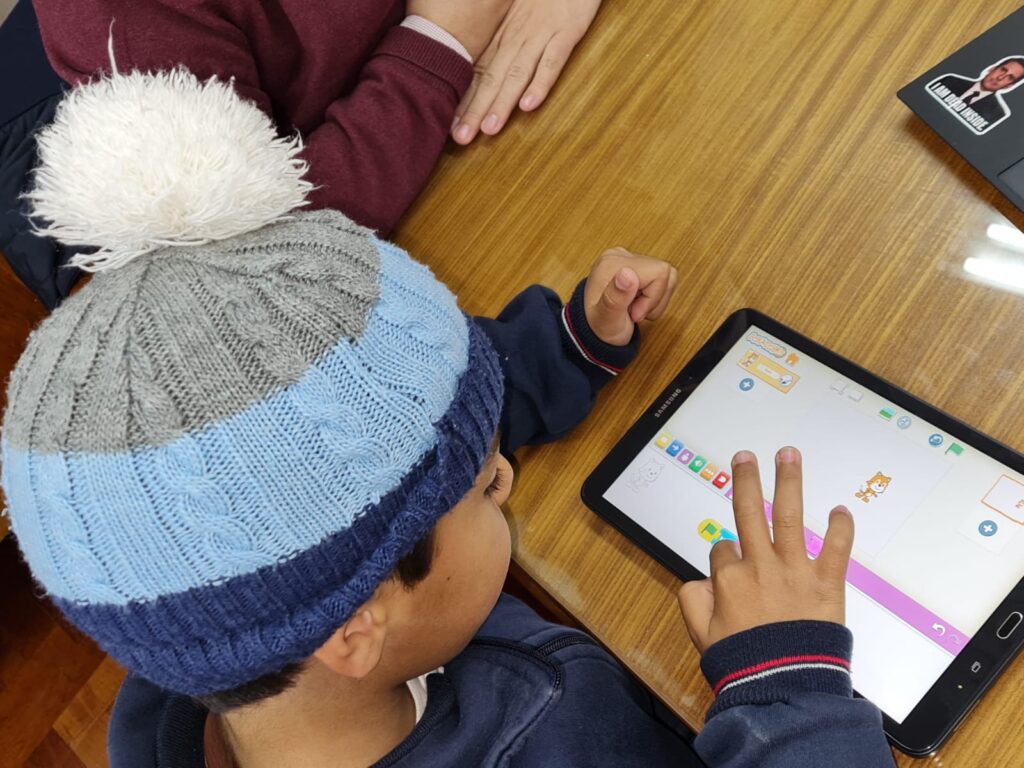
Our project, Computational Thinking for Elementary School, involved a culturally and resource-adapted curriculum implementation in Uruguayan K-2 classrooms (Montevideo and Canelones). From April to September 2024 (following planning in 2023), we evaluated learning outcomes for over 900 second-grade students and 38 teachers. Our assessment focused on children’s coding and computational thinking skills, as well as teacher competency and confidence before, during, and after professional development and classroom implementation. Initial observations highlight increased student exposure to coding, collaboration, sharing, and problem-solving, alongside notable excitement and confidence in coding.
This project allowed us to learn about how teachers learn and teach while providing us with activities and tools to continue fostering and supporting the development of computational thinking and programming as essential skills for everyday life.
Evidence
Who we are
Beth is a private bilingual Jewish school located in Palermo in Buenos Aires, Argentina. We consider each student as unique with specific interests and needs and believe that academic excellence is sought in each and every project, allowing for the development of the students’ maximum potential. We nurture respect for uniqueness as a fundamental value that fosters “learning to live together”. At Beth School, we believe it is important for students to develop empathy for others and an awareness of the world around them. We also recognize that there is no single path or fixed timeline for learning and acquiring knowledge. For us, quality education consists in building up the necessary foundations so that the students can “learn to learn” counting on the tools that will enable them to enjoy a permanent education.
Executive Principal: Alejandra Mizrahi
Kindergarten Principal: Cintia Schkulnik
Kindergarten Coordinator: Silvina Riganti
Educational Technology Coordinator: Orly Lev
Ed Tech Facilitator and Teacher: Magalí Vendramini
Ed Tech Collaborators: Denise Guerrero, Jonatan Ballestero
Email: institucional@beth.org.ar Address: Thames 2246, Buenos Aires, Argentina
What we care about
Our vision is to be the innovative Jewish bilingual school, referent for the educational community in Argentina. Our mission is to foster bilingual students in English with a strong Jewish identity and high academic standards, committed to social and community engagement, within a participatory institutional environment that promotes creativity, well-being, and respect for individuality.
What we have done
Celebrating Beth School’s 25th Birthday with Scratch Jr Blocks: the core objective was to explore, document, and experience using ScratchJr Blocks with five-year-old kindergarteners during the school’s 25th-anniversary project. We aimed to foster the children’s creativity, human values, collaboration, and critical thinking skills. This experience unfolded in the Maker Space – a shared tech environment for collaborative, cross-curricular projects involving kindergarten and primary students – and within various classrooms during the final weeks of school in December 2024.
Language was an interesting factor throughout the experience as the school is bilingual in English. The project was led by the Ed Tech teacher in English with students whose mother tongue was Spanish and received contributions from other teachers in both languages. Creating meaningful experiences in which Spanish and English mesh and are engaged is one of our main goals as an English bilingual school.
The project was carried out by the Ed Tech teacher with help from the IT Support Department. Additionally, 1 Spanish teacher and 2 English teachers provided assistance to record the lessons. 10 children were involved in the research.
The project had a powerful impact in our school as students who had never been able to tackle Sctrach Jr or had shown interest in coding found themselves captivated and engaged in coding thanks to the tangible blocks and new materials. The students that participated in the project developed higher coding skills than we had achieved in the past. Children were able to create complex algorithms and debug their own programmes with new strategies. Students also learned to reflect on their own learning and to surf the process understanding that creating successful programmes requires time, effort and collaboration.
Evidence
Who we are
These are the institutional cornerstones of our school’s identity:
COMMUNITY SCHOOL
We are more than a school—we are a community. We walk alongside families through the different stages of life, and we are moved by the opportunity to share in the growth of each of their children.
We promote volunteering and helping others, because what unites us as a community is our commitment to improving the lives of those around us. Our educational project is grounded in the principles of Tikkun Olam (repairing the world) through a range of programs and activities designed to raise awareness and motivate our students and their families in pursuit of the common good.
EXCELLENCE THROUGH INDIVIDUALITY
At Arlene Fern Community School, we pursue excellence with and for everyone. We combine high academic standards with a personalized approach that supports each student’s academic, social, and emotional journey. We focus on each student’s individuality and strive to create meaningful learning experiences that are both enjoyable and enriching.
Our inclusion program enhances the quality of our educational model by offering an environment where diversity is a source of growth for all.
INNOVATIVE SCHOOL
We strongly believe that every educational institution must rethink its structures to engage in a more meaningful dialogue with the world around it. At our school, we are committed to being in constant transformation—revisiting, updating, and adapting our educational approach to stay relevant and forward-thinking.
BILINGUAL SCHOOL
We offer a bilingual program where English language learning serves as a tool for communication, cultural awareness, and the development of empathy.
A high level of English proficiency also empowers our students to become global citizens, able to explore diverse contexts with confidence and fluency.
comunicacion@arlenefern.edu.ar
(+54) 011 4781-6090
Arribeños 1300, CABA – Buenos Aires, Argentina
What we care about
MISSION We are a community school that aims at educating students as agents of change to improve society. We nurture critical, proactive students who are committed to the values of diversity, the development of a Judeo-Argentine identity, and the State of Israel. Through innovative teaching practices, we strive for academic excellence in both the national and English curricula, within the framework of a progressive, liberal Jewish education. At the heart of our mission is the belief that learning should serve the community. VISION To be a leading school at the forefront of inclusive education, offering a model of excellence through individuality that respects different learning styles. To design innovative teaching formats and develop new models of Jewish education and community engagement.
What we have done
The project was named “Pesaj’s Code, We Choose the Road!” . The main goal was to design a meaningful, interdisciplinary project that would invite our third-grade students to deepen their connection with Jewish history and values. Our intention was to offer them a creative way to bring the story of Passover to life, using coding as another language to express it in their own unique voices.
The part of the project involving ScratchJr took place in our Digital Lab, where our Robotech lessons are held. Robotech is the school’s creative name for the official subject Technologies, Design, and Coding.
The project took place during the days leading up to the Pesaj celebration in April 2025. It was conducted in Spanish, incorporating key Hebrew words related to the Jewish story of Passover. It involved one Jewish Studies teacher and two Robotech teachers who led the project, working with two third-grade groups (twenty-five students in each).
We were especially thrilled with the triple literacy achieved in this project: storytelling through two natural languages (Spanish and Hebrew) and one artificial language (coding).
We also valued how naturally this project integrated computer science with humanistic education. First, it fostered a deeper understanding of the values behind Passover—empowerment, resilience, and the freedom to choose one’s own path. Second, it supported students’ social and emotional learning as they worked collaboratively.
And last but not least, it was truly moving to see how students designed animations and interactive stories that reflected the Jewish journey from slavery in ancient Egypt to liberation—showing us how they are gradually making their people’s story their own.
At our school, it is of the utmost importance to promote interdisciplinary, meaningful projects like this one—projects that involve powerful, transferable ideas that children can apply in other subjects as well. We also aim to foster the use of higher-order thinking skills, encouraging students to create something new based on what they already know.
Evidence
Central America
Who we are
Our mission at the Foundation is “to help every child become the best version of the adult they can be, by providing creative experiences and innovative educational tools tailored to them and the adults responsible for their care and development.” While children are our top priority, we understand that it is the responsibility of adults to provide them with the spaces and tools they need to grow in a holistic way. That’s why at Fundación Atención Atención, we not only serve children—we also offer learning experiences for the adults responsible for their education and care, so that with this knowledge, they can carry out their roles with excellence.
+1 787-455-5840
info@fundacionatencionatencion.org
What we care about
The first seven years of life are crucial, as 95% of brain development occurs during this period. During this time, children acquire the basic psychomotor and cognitive skills that will be established for life. As educational psychologist Francesco Tonucci once said, “All of life’s most important learning happens through play.” It is also the ideal time to work on values, a fundamental element for the integral development of individuals. Piaget, Montessori, Sauri, and many others have pointed out that we enhance learning in childhood when we use music and play, as these improve performance in reading, language, math, and overall academic achievement, while also strengthening other areas of human development. Different types of learning and ways of accessing knowledge—as well as cognitive, emotional, and psychomotor domains—can all benefit when learning processes begin early in life. For these reasons, all our programs, services, and initiatives are based on the child as a WHOLE being who must be impacted holistically by integrating components that stimulate every aspect of development. Through the characters and songs of Atención Atención, we create workshops, programs, games, and initiatives that are not designed merely to entertain, but to develop and stimulate children in every possible area. We place special emphasis on psychomotor skills, cognitive processes, healthy socialization, and values, with the goal of laying a solid foundation that enables more complex learning later on.
What we have done
Atención Atención Academy Workshop. It is increasingly essential to integrate curricula on programming/coding (the activity of reading and writing instructions that can be interpreted by a computer) and computational thinking (the thought process involved in expressing solutions as steps and algorithms executable by a computer) from an early age. Early childhood is a time when children are naturally curious, open to all kinds of experiences, and unafraid to make mistakes or keep trying. Starting early is ideal, as it fosters inclusion for all children before they begin forming their own ideas and stereotypes.
Moreover, this approach helps equip future generations with the skills they need to thrive and succeed in an increasingly technological society—one that demands rapid adaptability, problem-solving abilities, and critical thinking skills, among others.
Our project involved the Puerto Rico’s Public School System (145 teachers and their students from schools across the island including Vieques) from November 2024 – May 2025, it was conducted in Spanish.
For the first time, programming was introduced in classrooms of the DEPR as an integrated part of the core curriculum, rather than being treated as a separate subject or extracurricular activity, which is how it is commonly approached. Early childhood educators, with no prior training in technology or programming, became pioneers in using this curriculum and application. They witnessed firsthand that a vast majority of subjects and topics from the traditional curriculum can be taught through this approach, making learning more fun, relevant, and engaging for students. At the same time, it allows teachers to stay current and aligned with innovative teaching trends in the classroom.
Return to Symposium Page here.