
5.28
[1] Interim, dum Psȳchē quaestiōnī Cupīdinis intenta populōs circumībat, at ille vulnere lucernae dolēns in ipsō thalamō mātris iacēns ingemēbat. [2] Tunc avis peralba illa gāvia quae super flūctūs marīnōs pinnīs natat dēmergit sēsē properē ad Ōceanī profundum gremium. [3] Ibi commodum Venerem lavantem natantemque propter assistēns indicat adustum fīlium eius gravī vulneris dolōre maerentem dubium salūtis iacēre, (4) iamque per cūnctōrum ōra populōrum rūmōribus convīciīsque variīs omnem Veneris familiam male audīre, quod “ille quidem montānō scortātū tū vērō marīnō natātū sēcesserītis, [5] ac per hoc nōn voluptās ūlla nōn grātia nōn lepōs, sed incōmpta et agrestia et horrida cūncta sint, nōn nūptiae coniugālēs nōn amīcitiae sociālēs nōn līberum cāritātēs, sed ēnōrmis colluviēs et squālentium foederum īnsuāve fastīdium.” [6] Haec illa verbōsa et satis cūriōsa avis in auribus Veneris fīlī lacerāns exīstimātiōnem ganniēbat. At Venus īrāta solidum exclāmat repente: [7] “Ergō iam ille bonus fīlius meus habet amīcam aliquam? Prōmē agedum, quae sōla mihi servīs amanter, nōmen eius quae puerum ingenuum et investem sollicitāvit, sīve illa dē Nymphārum populō seu dē Horārum numerō seu dē Mūsārum chorō vel dē meārum Grātiārum ministeriō.”
[8] Nec loquāx illa conticuit avis, sed: “Nesciō,” inquit, “domina: putō puellam—sī probē meminī, Psȳchēs nōmine dīcitur—efflīctē cupere.” [9] Tunc indīgnāta Venus exclāmāvit vel maximē: “Psȳchēn ille meae fōrmae succubam, meī nōminis aemulam vērē dīligit? Nīmīrum illud incrēmentum lēnam mē putāvit cuius mōnstrātū puellam illam cognōsceret.”
A bird dives down to Venus and happily reveals Cupid’s secret to her.
quaestiōnī: dative object of the compound participle intenta
propter: Take adverbially. Venerem is the direct object of assistēns.
indicat: governs 2 indirect statements whose verbs are iacēre and audīre.
salūtis: objective genitive with dubium (A&G §349)
male audīre: “to hear ill (of oneself).” (L&S audiō II.D)
ille…fastīdium: The verbs are subjunctive because this is a subordinate clause within indirect discourse (A&G §580). Forms of sum have to be supplied in the clauses “ac…lepōs,” “nōn nūptiae…cāritātēs,” and “sed ēnōrmis…fastīdium.”
sēcesserītis: 2nd person plural with two subjects, ille and tū.
līberum: shortened form of līberōrum
exīstimātiōnem: take as “reputation”
amīcam: This word can also mean “mistress” or “courtesan” (L&S 2. amīcus, amīca I.B).
quae sōla: modifying an understood feminine tū
mihi: dative object of servīs
Nymphārum…Horārum…Mūsārum…Grātiārum: Each of these are a group of young, beautiful goddesses. The Nymphs were a large and diverse group of goddesses personifying various aspects of nature, such as rivers, mountains, and regions. The three or four Horae were associated with the seasons. The nine Muses were considered the patrons of various genres of art. The three Charites or Graces were associated with charm and beauty, thus why Venus calls them her own (OCD, “Nymphs”). (See Media for images.)
nec: not negating loquāx, but conticuit
Psȳchēs … Psȳchēn: Greek genitive and accusative singular forms, respectively.
cupere: puellam is the direct object, placed at the start of the clause for emphasis. The subject, Cupid, must be inferred from context.
vel maximē: “as loudly as possible,” “extremely loudly”
lēnam…mē: mē is the direct object of putāvit, while lēnam is a predicate accusative (A&G §392).
cognōsceret: subjunctive in relative clause of purpose
ingemēscō, -ere, -uī: to groan
gāvia, -ae, f.: a type of sea-bird, perhaps a tern (Kenney ad loc.)
dēmergō, -ere, -sī, -sus: to sink, plunge, dive
properē: swiftly
commodum: just then, at once
adustus, -a, -um < adūrō
scortātus, -ūs m.: whoring
natātus, -ūs m.: (the act of) swimming
lepōs = lepor, -ōris m.
incōmptus, -a, -um: rough, inelegant
ēnōrmis, -e: immoderate, immense
colluviēs, -ēī, f.: See 5.23.6
squāleō, -ēre, -uī: to be filthy, squalid, neglected
īnsuāvis, -e: unpleasant
ganniō, -īre: to chatter
solidum: (adv.) thoroughly
agedum: Come on!
ingenuus, -a, -um: not “native,” but “delicate,” “tender”
investis, -e: beardless
loquāx, -ācis: talkative
conticeō, -ēre, -uī: to be silent
efflictē (adv.): to death, desperately
succuba, -ae f.: rival
incrēmentum, -ī n.: progeny, offspring
lēna, -ae f.: pimp (female)
mōnstrātus, -ūs, m.: showing
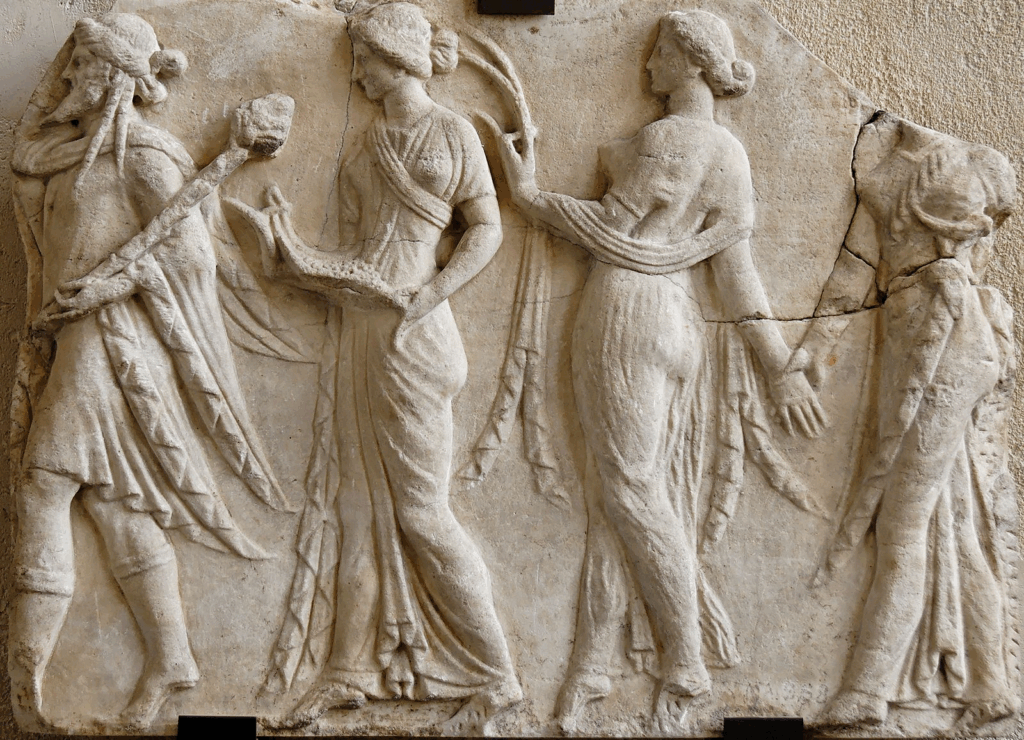
A marble Roman relief from the 1st c. BCE depicting Dionysus leading the Horae. Each Hora represents a different season, with the first one holding flowers for spring, the second a sheaf of wheat for summer, and the incomplete third Hora representing autumn. The fourth Hora for winter is missing. (Louvre Museum. Photo credit: Wikimedia Commons.)
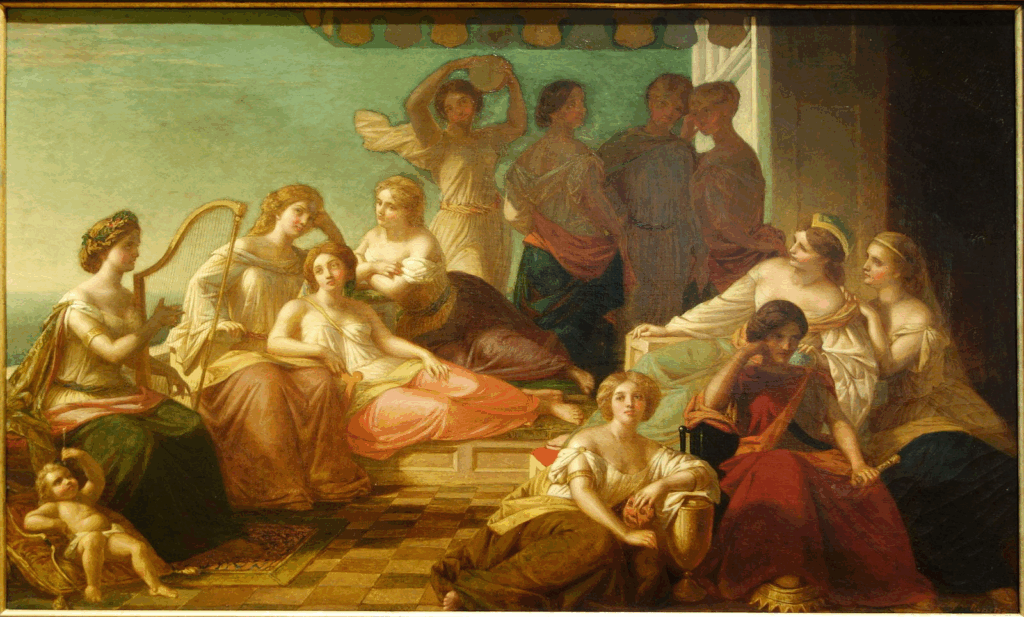
Thomas P. Rossiter, “Muses and Graces,” 1859, oil on canvas. Some of the Muses hold objects associated with their arts, such as a mask for drama and a drum for dance. (New Britain Museum of American Art. Photo credit: Wikimedia Commons.)