
5.8
[1] Sīc allocūta summās opēs domūs aureae vōcumque servientium populōsam familiam dēmōnstrat oculīs et auribus eārum lavācrōque pulcherrimō et inhūmānae mēnsae lautitiīs eās opiparē reficit, [2] ut illārum prōrsus caelestium dīvitiārum cōpiīs affluentibus satiātae iam praecordiīs penitus nūtrīrent invidiam. [3] Dēnique altera eārum satis scrūpulōsē cūriōsēque percontārī nōn dēsinit, quis illārum caelestium rērum dominus, quisve vel quālis ipsīus sit marītus. [4] Nec tamen Psȳchē coniugāle illud praeceptum ūllō pactō temerat vel pectoris arcānīs exigit, sed ē rē nātā cōnfingit esse iuvenem quendam et speciōsum, commodum lānōsō barbitiō genās inumbrantem, plērumque rūrestribus ac montānīs vēnātibus occupātum, [5] et nē quā sermōnis prōcēdentis lābe cōnsilium tacitum prōderētur, aurō factō gemmōsīsque monīlibus onustās eās statim vocātō Zephyrō trādit reportandās.
Psyche treats her sisters to all the palace’s delights (see Media for a Romantic rendering), and they ask her many questions about her husband. She answers that he is a young hunter. Psyche sends them away, heaped with gifts.
vōcumque servientium: “(of) the serving voices;” since the slaves are invisible, they appear only as voices.
praecordiīs penitus: abl. of place, “deep in their hearts.”
quis…sit maritus: indirect question, dependent on percontārī.
ūllō pactō: “in any manner.”
ē rē nātā: literally “from the thing produced at once,” but more idiomatically “in the spur of the moment.”
commodum lānōsō barbitiō genās inumbrantem: “his cheeks just now darkening with a wooly beard,” reinforcing the picture of Cupid as a young man just over the line of adolescence (see Media for illustration).
factō: modifies aurō.
reportandās: gerundive of purpose. Zephyrō can be taken as I.O. of trādit and/or dative of agent with reportandās.
populōsus, -a, -um: abounding in people, numerous (appears first in Apuleius)
lautitia, -ae f.: elegance, splendor
opiparus, -a, -um: splendid, rich, sumptuous
penitus (adv.): deep within
nūtriō, -īre, -īvī, -ītus: to nourish, nurture, nurse
scrūpulōsē (adv.): scrupulously, with great care
temerō, -āre: to violate, defile
cōnfingō, -ere, -fīnxī, -fictus: to fashion, fabricate, invent
lānōsus, -a, -um: wooly
barbitium, -ī, n.: beard
inumbrō, -āre: to shadow, darken
rūrestris, -e: rustic, rural
vēnātus, ūs, m.: hunting, (a) hunt
lābes, -is f.: slip, mistake (a meaning almost exclusive to Apuleius)
gemmōsus, -a, -um: bejeweled
onustus, -a, -um: loaded down, laden
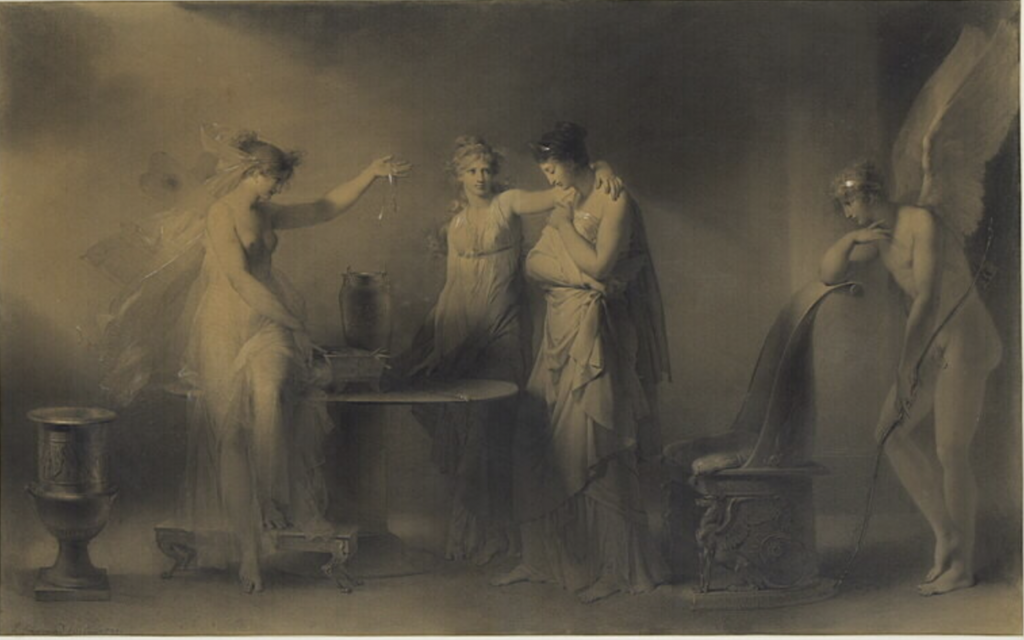
Psyche montre ses richesses à ses soeurs” (1797): A Romantic-era painting depicting Psȳchē (the winged figure) showing off the riches of her home to her sisters, watched by Cupid (Louvre).
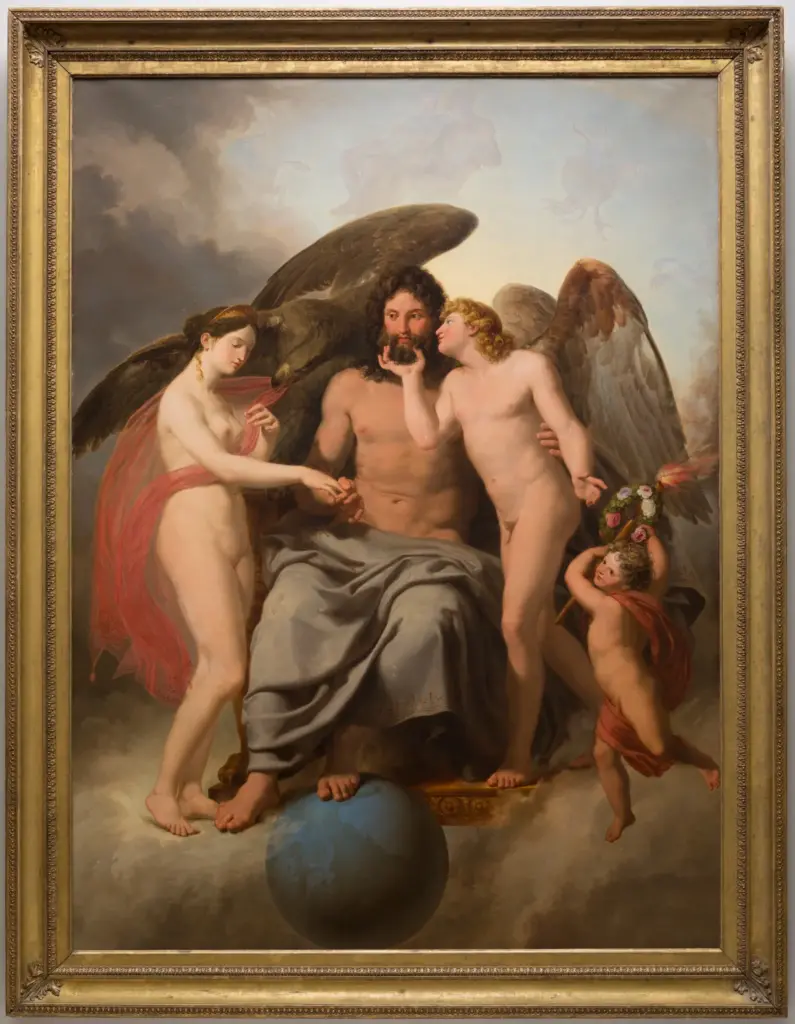
This painting illustrates the difference in appearance and demeanor between an older man (Jupiter) and youthful Cupid (Filippo Pelagio Palagi, Betrothal of Cupid and Psȳchē , c. 1808; Detroit Institute of Fine Arts)