
5.30
[1] Sed male prīmā ā pueritiā inductus es et acūtās manūs habēs et maiōrēs tuōs irreverenter pulsāstī totiēns et ipsam mātrem tuam, mē inquam ipsam, parricīda dēnūdās cotīdiē et percussistī saepius et quasi viduam utique contemnis nec vitricum tuum fortissimum illum maximumque bellātōrem metuis. Quidnī? [2] Cui saepius in angōrem meī paelīcātūs puellās propīnāre cōnsuēstī. Sed iam faxō tē lūsūs huius paeniteat et sentiās acidās et amārās istās nūptiās. [3] Sed nunc inrīsuī habita quid agam? Quō mē cōnferam? Quibus modīs stēliōnem istum cohibeam? Petamne auxilium ab inimīcā meā Sōbrietāte, quam propter huius ipsīus luxuriam offendī saepius? [4] At rūsticae squālentisque fēminae conloquium prōrsus horrēscō. Nec tamen vindictae sōlācium undeunde spernendum est. [5] Illa mihi prōrsus adhibenda est nec ūlla alia, quae castīget asperrimē nūgōnem istum, pharetram explicet et sagittās dēarmet, arcum ēnōdet, taedam dēflammet, immō et ipsum corpus eius ācriōribus remediīs coerceat. [6] Tunc iniūriae meae litātum crēdiderim cum eius comās quās istīs manibus meīs subinde aureō nitōre perstrīnxī dērāserit, pinnās quās meō gremiō nectareī fontis īnfēcī praetotonderit.”
Venus continues berating Cupid, and she promises vengeance.
male…inductus: “badly brought up” (Kenney ad loc.)
acūtās manūs habēs: This idiom (lit. “you have sharp/quick hands”) refers to Cupid’s being defiant (Kenney ad loc.)
vitricum: This is Mars who, here, is Cupid’s step-father—not father. This is an imitation of an Ovidian joke (Kenney ad loc.). See Amores 2.9.48 for one of several examples.
in angōrem meī paelīcātūs: “to cause distress by my having a rival” (Kenney ad loc.)
faxō: An archaic spelling of faciam.
tē lūsūs huius paeniteat: for the construction, see 5.22.2.
acidās et amārās: translate as “bitter.” The doubling up of two adjectives is for emphasis.
inrīsuī: dative of purpose (A&G §382)
agam, cōnferam, cohibeam, petam: deliberative subjunctives (A&G §443)
Sōbrietas: the goddess Temperance, Venus’ mortal enemy
quae: purpose clause introduced by a relative pronoun (A&G §531.2)
litātum: Supply esse. This is the impersonal passive verb of an indirect statement governed by crēdiderim.
crēdiderim: perfect subjunctive indicating possibility in the future
vitricus,- i, m.: step-father
irreverenter: (adv.) disrespectfully
dēnūdo, -āre: to strip, lay bare, betray
quidnī: why not?
angor, -ōris, m.: anguish
paelīcātus, –ūs m.: (the act of) being/having a mistress
propīno, –āre: to procure, furnish
lūsus, ūs, m.: game
inrīsus, –ūs, m.: mocking, derision
stēliō, stēliōnis, m.: lizard; (transf.) a sneaky person
squālēns, -entis: See 5.28.5
conloquium, -iī, n.: speech
horrēscō, -ere, -uī: to shudder
undeunde: from wherever, from anywhere at all
nūgo, ōnis, m.: See 5.29.4
dearmo, -āre: to blunt
ēnōdo, -āre: to unstring
dēflammo, -āre: to extinguish
litō, -āre: to bring an offering to, atone for (+ dat.) (L&S litō II.A)
nitor, ōris, m.: brightness, sheen
perstringō, -stringere, -strīnxī, -strictum: to bind tightly together
dērādo, -rādere, -rāsi, -rāsum: to shave off, to rub (off)
nectareus, -a, -um: nectared
praetondeo, -tondēre, -totondi: to clip in front of
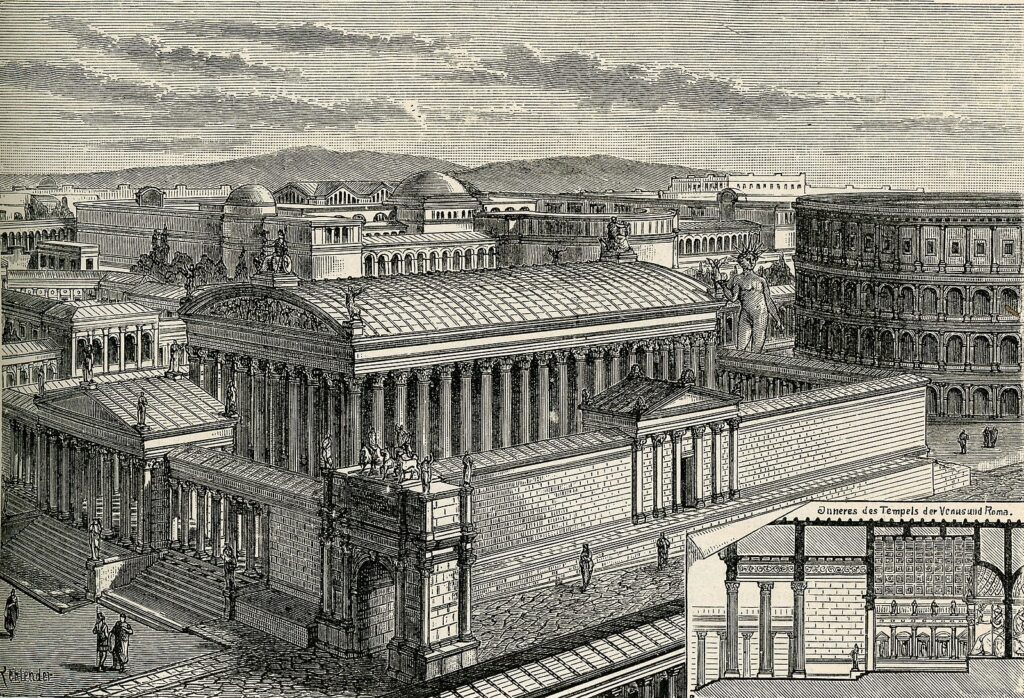
A 19th century drawing depicting a reconstruction of the Temple of Venus and Roma, where sacrifices would have been made to the goddess (Source: Wikimedia Commons).
