
5.22
[1] Tunc Psȳchē et corporis et animī aliōquīn īnfirma fātī tamen saevitiā subministrante vīribus rōborātur, et prōlātā lucernā et adrēptā novāculā sexum audāciā mūtātur. [2] Sed cum prīmum lūminis oblātiōne torī sēcrēta clāruērunt, videt omnium ferārum mītissimam dulcissimamque bēstiam, ipsum illum Cupīdinem formōnsum deum formōnsē cubantem, cuius aspectū lucernae quoque lūmen hilarātum incrēbruit et acūminis sacrilegī novāculam paenitēbat. [3] At vērō Psȳchē tantō aspectū dēterrita et impos animī marcidō pallōre dēfecta tremēnsque dēsēdit in īmōs poplitēs et ferrum quaerit abscondere, sed in suō pectore; [4] quod profectō fēcisset, nisi ferrum timōre tantī flāgitiī manibus temerāriīs dēlāpsum ēvolāsset. Iamque lassa, salūte dēfecta, dum saepius dīvīnī vultūs intuētur pulchritūdinem, recreātur animī. [5] Videt capitis aureī geniālem caesariem ambrosiā tēmulentam, cervīcēs lacteās genāsque purpureās pererrantēs crīnium globōs decoriter impedītōs, aliōs antependulōs, aliōs retropendulōs, quōrum splendōre nimiō fulgurante iam et ipsum lūmen lucernae vacillābat; [6] per umerōs volātilis deī pinnae rōscidae micantī flōre candicant et quamvīs ālīs quiēscentibus extimae plūmulae tenellae ac dēlicātae tremulē resultantēs inquiēta lascīviunt; [7] cēterum corpus glabellum atque lūculentum et quāle peperisse Venerem nōn paenitēret. Ante lectulī pedēs iacēbat arcus et pharetra et sagittae, magnī deī propitia tēla.
As she prepares to kill her husband, Psyche sees him for the first time. He is not at all what she expected! This scene both recalls and contrasts with earlier moments when Actaeon (2.4) and Lucius (3.21) witness something supernatural that they should not have seen.
fātī…saevitiā: Just as Cupid warned (5.2.2), hostile Fortune/Fate is pushing Psyche toward self-destructive action.
sexum…mūtātur: Take mūtātur as either middle (“changes her sex”) or passive, with sexum as acc. of respect (“is changed with respect to her sex”). For other examples of women transcending gender out of audacia, see 6.27 (the old woman, capta super sexum et aetaem audacia) & 8.11 (Charite, masculis animis).
oblātione: here used in etymological sense, “by the holding forward (of).”
cuius aspectū: cuius is objective genitive.
hilarātum incrēbruit: “grew cheerful,” “flared up cheerfully”
acūminis sacrilegī novāculam paenitēbat: (acc.) feels regret about (gen.). (A&G §354b)
marcidō pallōre: abl. Of manner (A&G §412).
dēfecta: Psyche is described as dēfecta twice in 2 sentences, in slightly different, escalating meanings; here, “weak, exhausted.”
in īmōs poplitēs: “all the way down on her knees”
fēcisset, nisi…ēvolāsset: Past contrary-to-fact condition, with the apodosis first.
quod: Connecting relative, refers to previous clause.
salūte dēfecta: Here, dēficiō in the passive + abl. = “to be deprived of, lack”.
recreātur animī: Animī can be used. with verbs of feeling as a sort of locative gen. (AG §358). In bk. 5, recreō has previously been applied to sleep (5.1.1), bathing, food, and rest (5.5.6), and the company of sisters (5.7.6, 5.13.4), none of which has provided true, lasting restoration.
genāsque…impedītōs: globōs = subject, genās = D.O. of pererrantēs. This lavish look at Cupid’s hair draws on Vergilian descriptions of Ascanius (fusos cervix cui lactea crinis accipit, Aen. 10.137) and Gauls on the shield of Aeneas (aurea caesaries …tum lactea colla, Aen. 8.659-60); it also recalls Lucius’ own hair obsession (Met. 2.8-9, 11.3).
aliōs antependulōs, aliōs retropendulōs: “some hanging down in front, others hanging down behind.” These adjectives are Apuleian inventions.
extimae plūmulae tenellae: “the tips of…”. The paired diminutives stress how tiny, cute, and delicate these feathers are.
quāle…paenitēret: present contrary-to-fact.
iacēbat: singular, agreeing with the closest subject (arcus).
aliōquīn: (adv.) otherwise
subministrō, -āre: to aid
rōborō, -āre: to strengthen
novācula, -ae f.: see 5.20.2.
clārēscō, -ere, claruī: to grow bright, become visible
acūmen, -inis n.: (sharp) point
impos, -otis: powerless over, not master of (+ gen.)
marcidus, -a, -um: weak, feeble
ēvolō, -āre: to fly away/out of
geniālis, -e: delightful, joyful
caesaries, -ēi, f.: hair
tēmulentus, -a, -um: drunk, dripping
lacteus, -a, -um: milky-white
pererrō, -āre: to wander across
fulgurō, -āre: to glitter, shine
vacillō, -āre: to waver, hesitate
volātilis, -e: winged, flying
rōscidus, a, um: See 5.1.1
candicō, -āre: to be bright white, gleam
dēlicātus, -a, -um: dainty
resultō, -āre: to spring back and forth
inquiēta: (adv.) restlessly
lascīvio, -īre, -iī, -ītum: to play wantonly, frolic
glabellus = dim. of glaber, -bra-, brum: smooth, hairless
lūcŭlentus, -a, -um: full of light
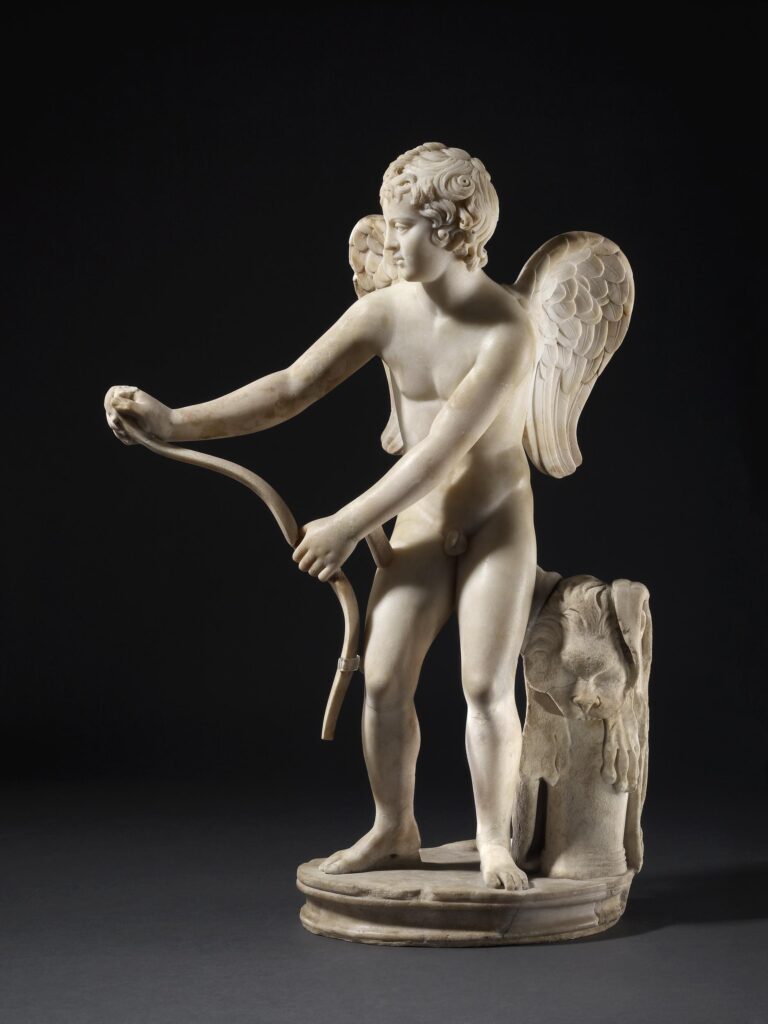
2nd-cen. CE marble statuette of Cupid holding a bow. The quiver next to him is covered with a lion skin. (London, British Museum)
The image of Psyche looking at the sleeping Cupid is frequently evoked in visual art and poetry, including Eavan Boland’s “Formal Feeling”, Lost Land (Norton, 1998), analyzed by McNeel and Sabnis 2022.
A winged god
came to a woman at night.
Eros you know the story. You ordained it.
The one condition was she did not see him.
So it was dark when he visited her bed.
And it was good. She felt how good it was.
But she was curious. And lit a lamp.
And saw his nakedness. And he fled.
Into the dark. Into the here and now
and air and quiet of an Irish night,
where I am writing at a darkening window
about a winged god and his lover,
watching the lines and stanzas and measures,
which were devised for these purposes,
disappearing as the shadows close
in around the page
under my hand.
How can I know a form unless I see it?
How can I see it now?
I propose
the light she raised over his sleeping body
angered heaven because it made clear
neither his maleness nor his birth, nor
his face dreaming, but
the place where the sinew of his wings
touched the heat of his skin
and flight was brought down—
To this. To us. To earth.
Eros look down.
See as a god sees
what a myth says: how a woman still
addresses the work of man in the dark of the night:
The power of a form. The plain
evidence that strength descended here once.
And mortal pain. And even sexual glory.
And see the difference.
This time—and this you did not ordain—
I am changing the story.