
5.19
[1] “Vōs quidem, cārissimae sorōrēs, ut pār erat, in officiō vestrae pietātis permanētis, vērum et illī quī tālia vōbīs adfirmant nōn videntur mihi mendācium fingere. [2] Nec enim umquam virī meī vīdī faciem vel omnīnō cuiātis sit nōvī, sed tantum nocturnīs subaudiēns vōcibus marītum incertī statūs et prōrsus lūcifugam tolerō, bēstiamque aliquam rēctē dīcentibus vōbīs meritō cōnsentiō. [3] Mē namque magnopere semper ā suīs terret aspectibus malumque grande dē vultūs cūriōsitāte praeminātur. [4] Nunc sī quam salūtārem opem perīclitantī sorōrī vestrae potestis adferre, iam nunc subsistite; cēterum incūria sequēns priōris prōvidentiae beneficia conrumpet.”
[5] Tunc nānctae iam portīs patentibus nūdātum sorōris animum facinerōsae mulierēs, omissīs tēctae māchinae latibulīs, dēstrictīs gladiīs fraudium simplicis puellae paventēs cōgitātiōnēs invādunt.
Psyche asks her sisters to help her escape her husband.
quidem…verum…: “on one hand… on the other hand…” Verum is connective rather than adversative here (Kenney ad loc.)
ut par erat: “as is proper”
nec…vīdī…vel…nōvī: the nec negates both clauses.
cuiātis sit nōvī: indirect question governed by nōvī.
incertī statūs: genitive of quality (A&G § 345)
bēstiamque aliquam: indirect statement governed by dīcentibus
dīcentibus vōbīs: dative object of compound verb cōnsentiō.
cūriōsitāte: Misplaced curiosity is a major recurring theme of this novel. Here, it implies that Psyche’s curiosity about Cupid’s appearance is destructive.
quam salūtārem opem: “any safety-giving help”
priōris prōvidentiae beneficia: i.e. the sister’s previous advice
omissīs tēctae māchinae latibulīs: This is a military metaphor implying the sisters attempt to persuade Psyche to do as they wish.The metaphor imagines Psyche’s mind as a walled city which the sisters had been besieging. At the start of the sentence, they’ve gotten the gates open (portis patentibus), which means that they can stop concealing themselves in siege machinery (tectae machinae) & instead just send their soldiers in with swords drawn. See Media for an image of a Roman testudo formation from the Column of Trajan.
fraudium: genitive of material (A&G § 344)
cūiātis, -is: from where?
tantum: See 5.3.3.
subaudio, īre: to hear a little
subsistō, -ere, -stitī: to know
lūcifugus, -a, -um: light-shunning
praeminor, -ārī: to threaten greatly
cēterum: otherwise (L&S s.v. ceterus IIA1)
incūria, -ae f.: negligence
perīclitor, -ārī: to be in danger
facinōrosus, -a, -um: vicious, wicked
latibulum, -i n.: a hiding place
dēstringo, -ere, -xī, -ctum: to draw (a sword)
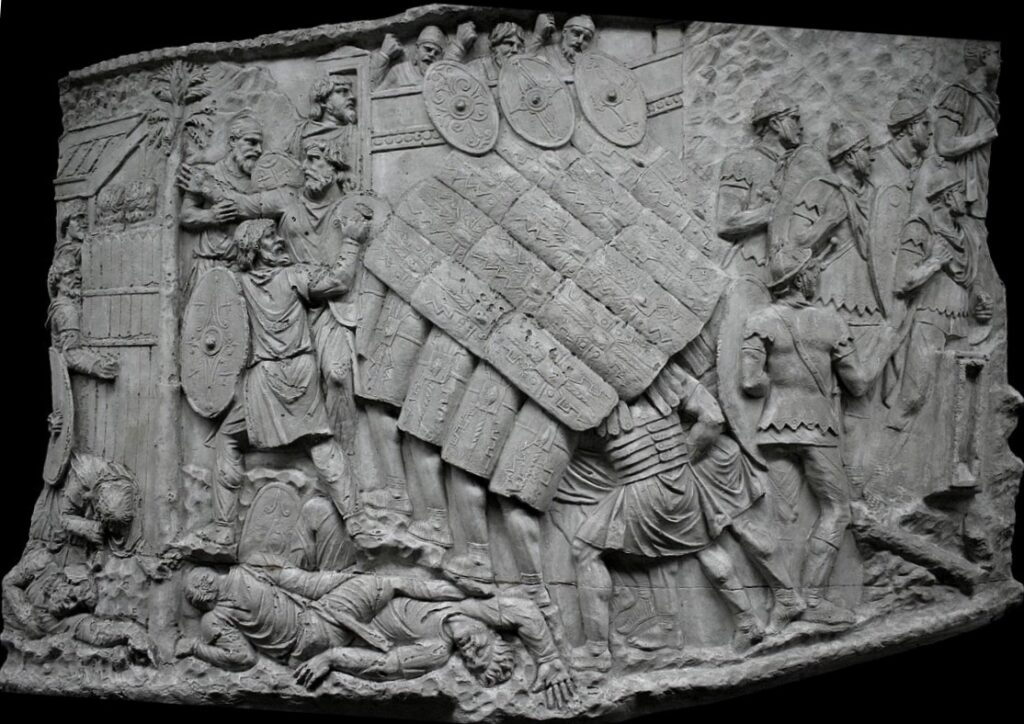
This panel from Trajan’s Column depicts the testudo formation used to attack a walled city, as Psyche’s sisters metaphorically employ a tecta machina to implant their malicious plan in Psyche’s mind.
(Museo della Civiltà Romana, Rome; image from Wikimedia Commons)
