
5.17
[1] Sīc īnflammātae, parentibus fastīdienter appellātīs et nocte turbātīs vigiliīs perditā, mātūtīnō scopulum pervolant et inde solitō ventī praesidiō vehementer dēvolant lacrimīsque pressūrā palpebrārum coāctīs hōc āstū puellam appellant: [2] “Tū quidem fēlīx et ipsā tantī malī ignōrantiā beāta sēdēs incūriōsa perīculī tuī, nōs autem, quae pervigilī cūrā rēbus tuīs excubāmus, clādibus tuīs miserē cruciāmur. [3] Prō vērō namque comperimus nec tē, sociae scīlicet dolōris cāsūsque tuī, cēlāre possumus immānem colubrum multinōdīs volūminibus serpentem, venēnō noxiō colla sanguinantem hiantemque ingluviē profundā, tēcum noctibus latenter adquiēscere. [4] Nunc recordāre sortis Pȳthicae, quae tē trucis bēstiae nūptiīs dēstinātam esse clāmāvit. Et multī colōnī quīque circumsecus vēnantur et accolae plūrimī vīdērunt eum vesperā redeuntem ē pāstū proximīque flūminis vadīs innatantem.
Psyche’s sisters scheme to ruin her marriage, jealous that she has married a rich god. They are the subject of īnflammātae and the main verbs.
nocte turbātīs vigiliīs perditā: “After the night was spent with disturbed wakefulness…” The sisters are so distracted they can’t even sleep.
ipsā … ignōrantiā: Abl. of cause with beata: “blessed because…” (A&G §404).
prō vērō: “As a fact.”
sociae scīlicet dolōris cāsūsque tuī: Sociae (we, allies…) agrees with the sisters. Scilicet (“obviously”) adds a sarcastic tone to this.
cēlāre: This verb can support two direct objects. The first is tē and the second is the indirect statement immānem… adquiēscere.
serpentem: Take as a form of serpō, ‘to creep, slither.’ The sisters’ description of Cupid is similar to the Laocoön scene in Vergil’s Aeneid, 2.206-10 (Kenney ad loc.). (See Media for image)
colla sanguinantem: Take colla as an accusative of respect: “(being) bloody with respect to his neck(s).”
recordāre: 2nd s. imperative of recordōr. Verbs of remembering take a genitive as their object.
sortis Pȳthicae: See 4.33 for the oracle. In a snake context, Apollo’s epithet as the killer of Python is apt.
fastīdienter: (adv.) disdainfully, scornfully
mātūtīnō: (adv.) early, in the morning
pervolō, -āre: to dash through
pressūra, -ae f.: pressing, pressure
palpebra, -ae f.: eyelid (usually plural)
āstus, -ūs m.: craft, cunning
ignōrantia, -ae f.: ignorance (of) (+ obj. gen.)
incūriōsus, -a, -um: careless, indifferent (+ obj. gen.)
pervigil, -is: wide awake
excubō, -cubāre, -cubuī, -cubitum: to be alert (for), sleep outside to keep watch
comperiō, -īre, -perī, -pertum: to find out with certainty, learn
coluber, -brī, m.: a snake, serpent
volūmen, -inis, n.: coiling
ingluviēs, -ēī f.: maw, jaw
latenter: (adv.) secretly
circumsecus: (adv.) around, in the surrounding area
accola, -ae m./f.: neighbor
pāstus, -ūs m.: pasturing, feedinginnatō, -āre: to swim in
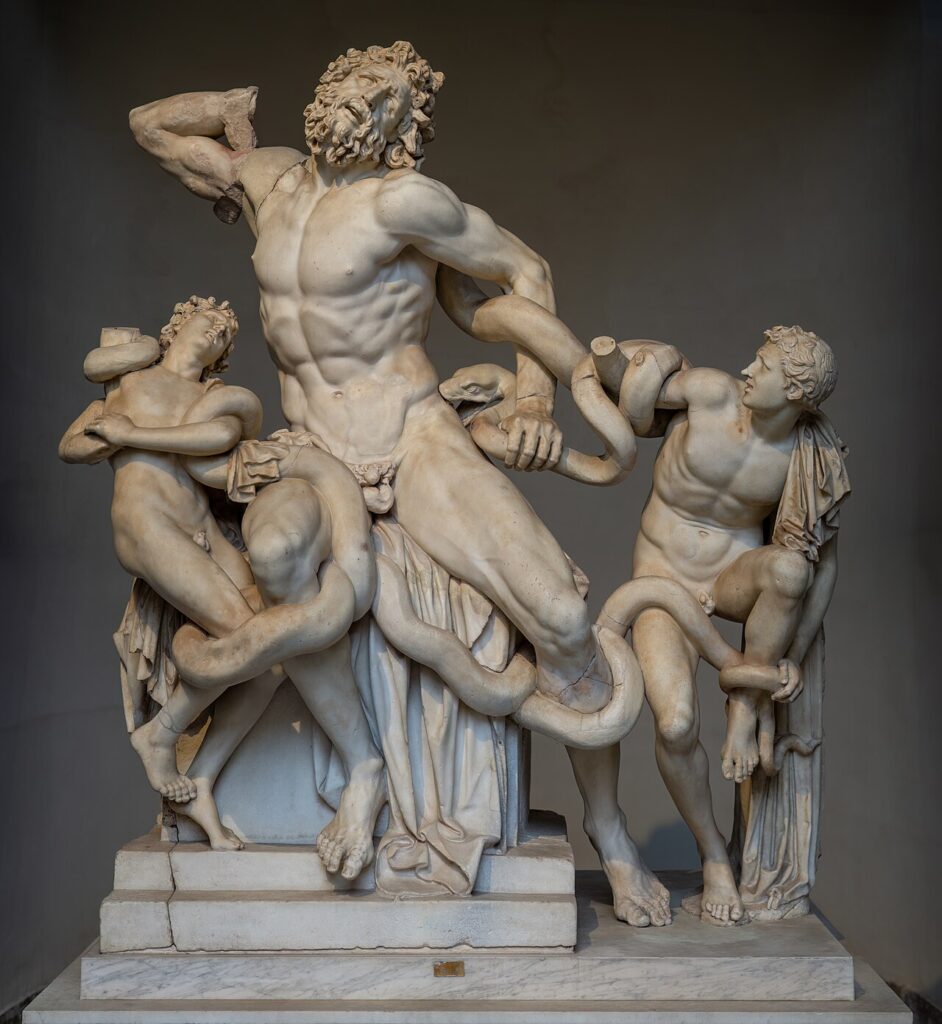
The sisters’ description of Cupid is similar to the Laocoön scene in Vergil’s Aeneid, 2.206-10. This marble statue group depicts Laocoön and his sons being violently constricted and consumed by snakes. (Vatican City, Musei Vaticani). Photo credit: Wikimedia Commons.

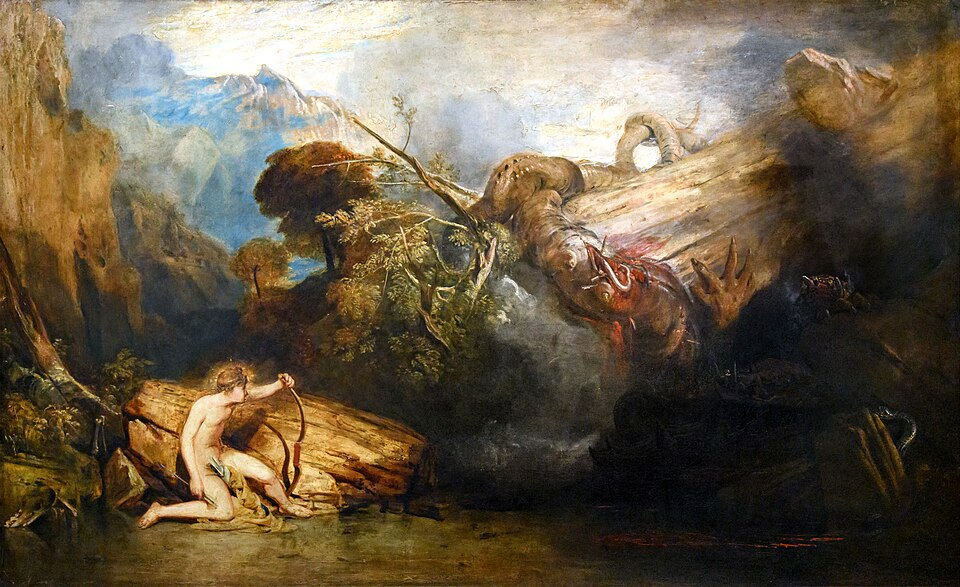
_Apollo_and_Python_-_1811_-_William_Turner_-_Tate_Britain.jpg)